Heads up: some links here are affiliate links. If you buy through one we may earn a commission, at no extra cost to you. More
Brain Training for Dogs: A $67 online course (regular price $127) with 21+ brain games across seven levels, obedience lessons, trick videos and a members' forum, with a 60-day refund window.
See what's inside Brain Training for Dogs60-day money-back guarantee
What is clicker training and how does it work with a puppy?
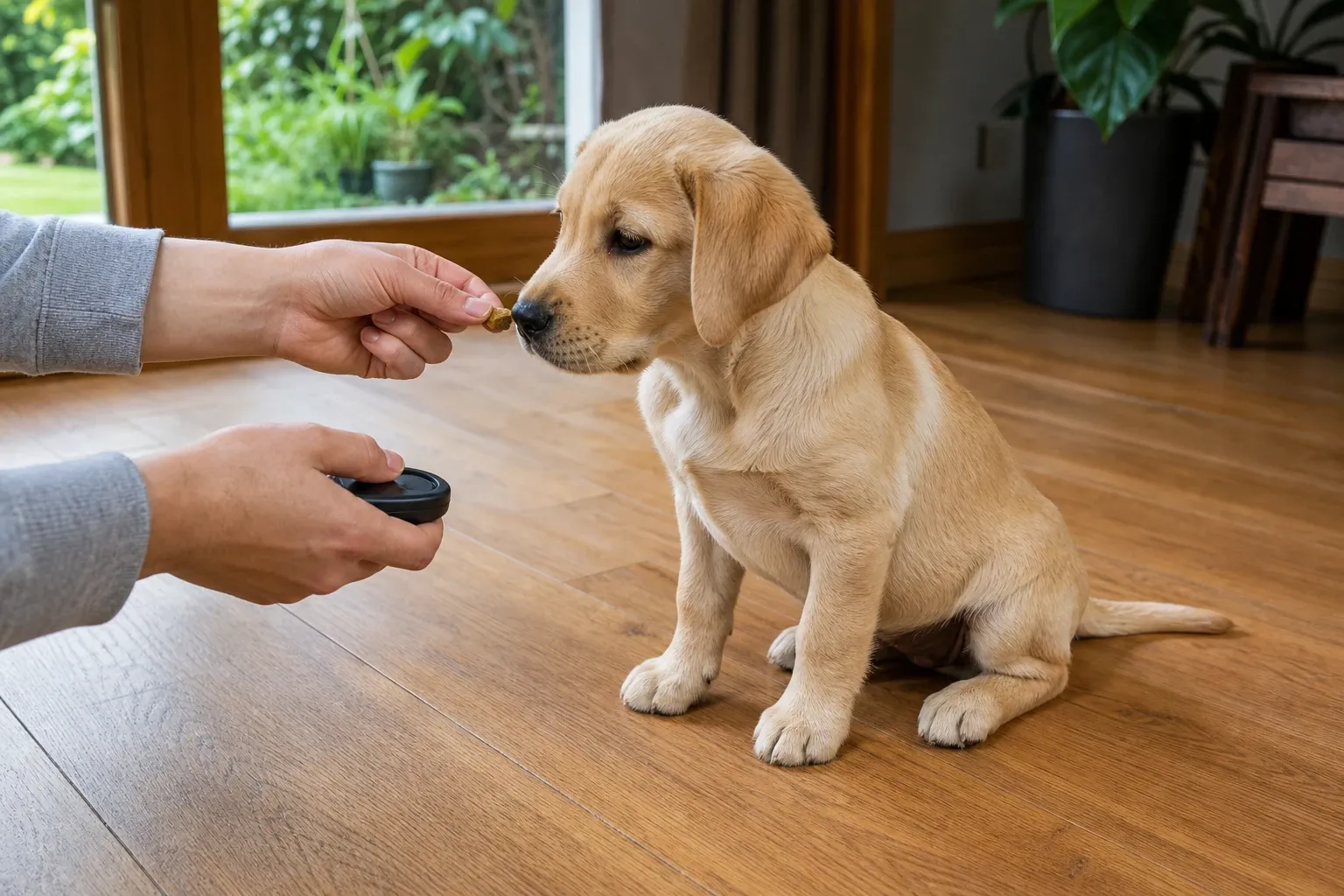
Clicker training is a reward-based method where a short click marks the exact moment your puppy does something right, and a treat follows every time. The clicker is a small plastic box with a metal tab that makes a sharp, unique sound.
On its own, the click means nothing. Once you pair it with food, it becomes a signal your puppy loves. Trainers call this a secondary reinforcer: a sound that gains value because it predicts something good, like a treat or praise.
Why bother with a click instead of just handing over food? Because your hand is slow. By the time the treat arrives, your puppy may have stood up again. The click is like taking a photo of the moment that earned the reward.
This is positive reinforcement: you add something good to make a behaviour more likely. There’s no punishment, no scolding and no yanking. And the click sounds the same whoever holds it, so the whole family can train with it.
For example, if your puppy glances at you in the kitchen, click, then hand over a treat. You’ve just told them “that look paid off.”
What do you need before you start?
You need a clicker (or a marker word), a pouch of tiny treats and a quiet room. That’s it. This setup suits puppies and adult dogs alike.
Choosing a clicker (and alternatives like a verbal ‘yes’, pen or whistle)
Any basic clicker works for most puppies. If your puppy has sound sensitivity (flinches at sudden noises), pick a soft-sounding clicker, or muffle a standard one in your pocket or behind your back.
No clicker? These work too:
- A short marker word like “yes!” said the same way each time
- A retractable pen click
- A soft whistle note
A verbal marker is handy for busy households, since you always have it with you.
Treats and where to train
Use soft treats about the size of a pea, so your puppy can eat fast and stay keen. Small pieces of cooked chicken or soft training treats work well. Start in a quiet room with few toys or people around.
Quick tip: Hold the clicker in one hand and treats in the other, or keep treats in a pouch. Mixing them up makes your timing messy.
How do you charge the clicker?
Charging the clicker means teaching your puppy that click equals treat, before you ask for anything at all.
- Sit with your puppy in a quiet room.
- Click once, then give a treat within a second or two.
- Repeat 10 to 15 times, at random moments. Your puppy doesn’t need to do anything.
- Watch for the sign it’s working: your puppy’s head snaps toward you, or toward your treat hand, at the click.
That head turn is the moment your puppy has made the link. Most puppies get there in one short session, though some need two.
If your puppy startles or backs away, stop. Muffle the clicker in a pocket, sit further away, or switch to a marker word. The goal is a sound your puppy is glad to hear.
This step is great for young puppies just settling in, because it’s easy, gentle and full of treats.
How do you teach your first cue step by step?
Sit is the best first cue for a puppy, because puppies sit naturally and often. You can either wait for it (capturing) or guide it with food (luring).
Step-by-step: sit by capturing or luring
- Stand with your puppy in your quiet room, treats ready.
- Capturing: wait until your puppy sits on their own. Luring: hold a treat at their nose and move it slowly up and back over their head until their bottom drops.
- Click the instant their bottom touches the floor.
- Give the treat. Every click gets a treat, every time.
- Repeat 5 to 10 times, then stop.
- Once your puppy sits easily, say “sit” once just before they do it. This is how voice commands get attached.
- When lured, fade the food lure into an empty-hand signal after a few good sessions.
Timing matters most here. A late click rewards whatever happened last. If you click as your puppy stands back up, you’ve just paid for standing.
Capturing suits calm puppies; luring suits busy ones who won’t sit still. The sit guide has more on this cue.
Shaping small steps and adding a voice cue
Shaping means clicking small steps toward a bigger behaviour. To teach “go to your bed,” click a look at the bed, then a step toward it, then a paw on it, then all four paws.
Add the voice cue only once the full behaviour happens reliably. People often ask which trick is hardest; usually it’s anything with lots of small steps or distractions, like a long stay or a solid recall. Shaping is how you break those down.
Building stay with duration
Stay is built one second at a time. Ask for a sit, wait one second, click, treat. Next, two seconds. Then three. If your puppy pops up, go back to a shorter wait.
The same click-and-treat method helps with come when called, lead walking (click when the lead is loose) and potty training (click the moment your puppy finishes outside).
How long should sessions be and how long do you keep using the clicker?
Clicker sessions for a puppy work best at 3 to 5 minutes, two or three times a day. Puppies learn well in short bursts, and you’ll both stay fresh.
Session length and repetitions per day
Aim for this rough schedule:
| Puppy stage | Sessions per day | Length | Reps per session |
|---|---|---|---|
| Under 4 months | 2 to 3 | 2 to 3 minutes | 5 to 10 |
| 4 to 6 months | 2 to 3 | 3 to 5 minutes | 10 to 15 |
| 6 to 12 months (adolescent) | 2 to 3 | 3 to 5 minutes | 5 to 15, higher-value treats |
| Adult dogs | 1 to 3 | 5 minutes | 10 to 15 |
End while your puppy still wants more. If they wander off or start nipping, you went a bit long. Next time, stop sooner.
When to fade the clicker
Fade the clicker for a cue once your puppy gets it right in about 8 out of 10 tries, in at least three different places. Then swap the click for praise and give treats now and then.
The clicker is a teaching tool, not a forever crutch. Think of it like training wheels for one skill at a time. Put it away for sit once sit is solid, then bring it back out for the next new trick. Many owners keep using it for new skills for life.
If you’d like structured follow-on lessons once the basics click, Brain Training for Dogs by Adrienne Farricelli is one option: self-paced games and obedience lessons you follow at home. Our Brain Training for Dogs review covers what’s inside and who it suits.
See the current Brain Training for Dogs course, price and refund terms on the creator’s site.
See what's inside Brain Training for Dogs60-day money-back guarantee
Does puppy age matter, and what is the 7 7 7 rule?
Puppy age changes how you train, not whether clicker training works. A clicker suits an 8-week-old puppy, a teenager and an adult dog.
The 7 7 7 rule for puppies
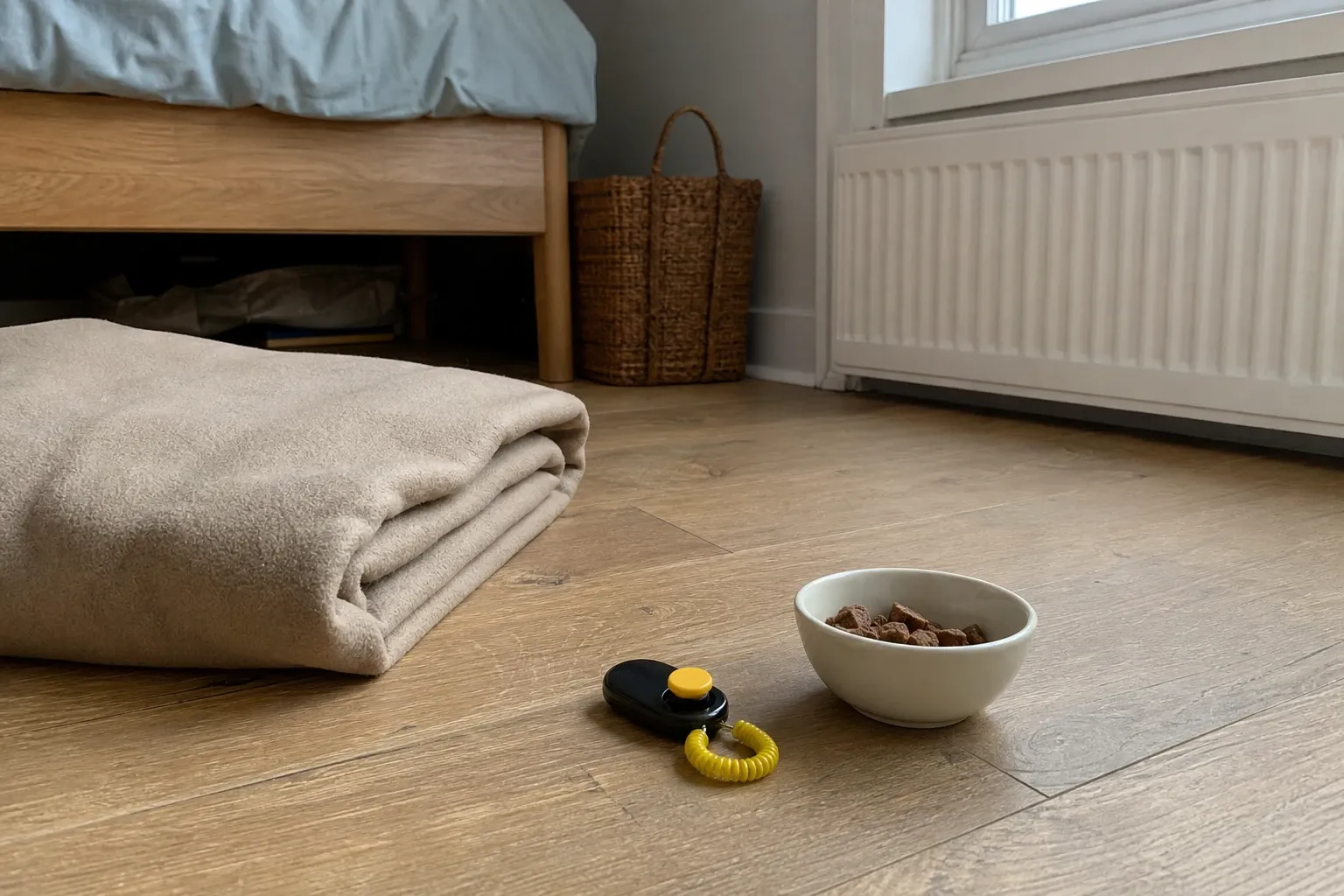
The 7 7 7 rule is a popular rule of thumb for a rescue puppy or dog settling in: roughly 7 days to decompress, 7 weeks to learn your routine, and 7 months to feel fully at home. It’s a loose guide, not a scientific timetable. For a new rescue, keep early clicker sessions extra short and easy.
What is the hardest age to train a puppy?
Adolescence, roughly 6 to 12 months, is often the hardest stage. Cues your puppy knew may seem to vanish. Go back to easier steps, use tastier treats, train in quieter spots and keep sessions short.
Adult dogs learn with a clicker too. They may just need more time and patience to swap old habits for new ones.
What mistakes and problems should you watch for?
The most common clicker training mistakes are clicking late, clicking without a treat and using the click for the wrong job.
Clicking late or clicking unwanted behaviour
- Don’t click without treating. That weakens the click’s meaning.
- Don’t use the click to call your puppy or interrupt them. It marks good behaviour only.
- Don’t click jumping, barking or biting by accident. Wait for calm, then click.
If your timing slips, practise without your puppy: drop a ball and click as it hits the floor.
The puppy ignores or fears the clicker
If your puppy ignores the click, use better treats, move somewhere quieter and recharge the clicker with 10 quick click-treat pairs.
If your puppy fears the sound, muffle it, click from further away or switch to a marker word. If fear shows up around lots of everyday sounds, or behaviour changes suddenly, check in with your vet first, and consider a qualified dog trainer or behaviour professional.
Where does clicker training fit with your puppy’s other basics?
Clicker training is a way to teach your puppy’s core cues, not a separate subject. Once your marker is charged, you can use it for every skill on the list of puppy training commands, from sit and down to leave it.
For a wider plan covering routines, socialising and house manners, start with our guide to dog & puppy training at home. When you’re ready for the next cue, the stay guide builds neatly on the duration steps here.
Your next step is simple: grab ten tiny treats and charge the clicker today.
Owners also ask
Do you need a clicker to train a puppy?
No. A clicker is helpful because the sound is short and identical every time, but a marker word like “yes!” works well too. The key is marking the exact moment your puppy gets it right, then always following with a treat. Many owners use both, keeping the word for times the clicker isn’t handy.
How many treats will my puppy eat in a session?
A short session of 5 to 15 repetitions means roughly 5 to 15 treats, several times a day. Keep pieces pea-sized and soft, and count training treats as part of your puppy’s daily food. Cutting back a little on meals helps avoid overfeeding, and your vet can advise on the right amount.
Can two people use the same clicker with one puppy?
Yes. Clicker training works the same whoever holds it, because the sound doesn’t change. Each person should charge the link with a few click-treat pairs, use the same voice cues and always treat after a click. Training at separate times avoids confusing the puppy with two clickers going at once.