Heads up: some links here are affiliate links. If you buy through one we may earn a commission, at no extra cost to you. More
Brain Training for Dogs: A $67 online course (regular price $127) with 21+ brain games across seven levels, obedience lessons, trick videos and a members' forum, with a 60-day refund window.
See what's inside Brain Training for Dogs60-day money-back guarantee
What do I need before I start teaching recall?
To teach recall (coming when called), you need a recall cue word, high-value treats, a long line and one firm rule. That’s the whole kit.
- A recall cue word. Pick a word you don’t use in daily chat, like “here” or “come”. Your dog’s name alone isn’t enough, because you say it all day. Use the cue only when you want your dog to come to you.
- High-value treats. Think tiny pieces of chicken, cheese or hot dog. These beat dry kibble when the world gets interesting.
- A leash and a long line. A regular leash for walks, plus a 15 to 30 foot long line (a long, light lead) for outdoor practice.
- The rule: never punish recall. Never call your dog to scold them, end the fun or do something they dislike, like a bath or nail trim. Go and get them instead.
Keep sessions short: a few minutes, several times a day. Short, frequent sessions keep your dog keen and keep you from getting frustrated.
For example, a busy household might do three 2-minute sessions: before breakfast, after work and before bed. This setup works for puppies and adult dogs alike.
How do I teach my dog to come when called, step by step?
Teaching your dog to come when called works best in four stages: a quiet room, the gotcha game, more distance indoors, then the yard and a quiet park.
Step 1: Start in a hallway or quiet room
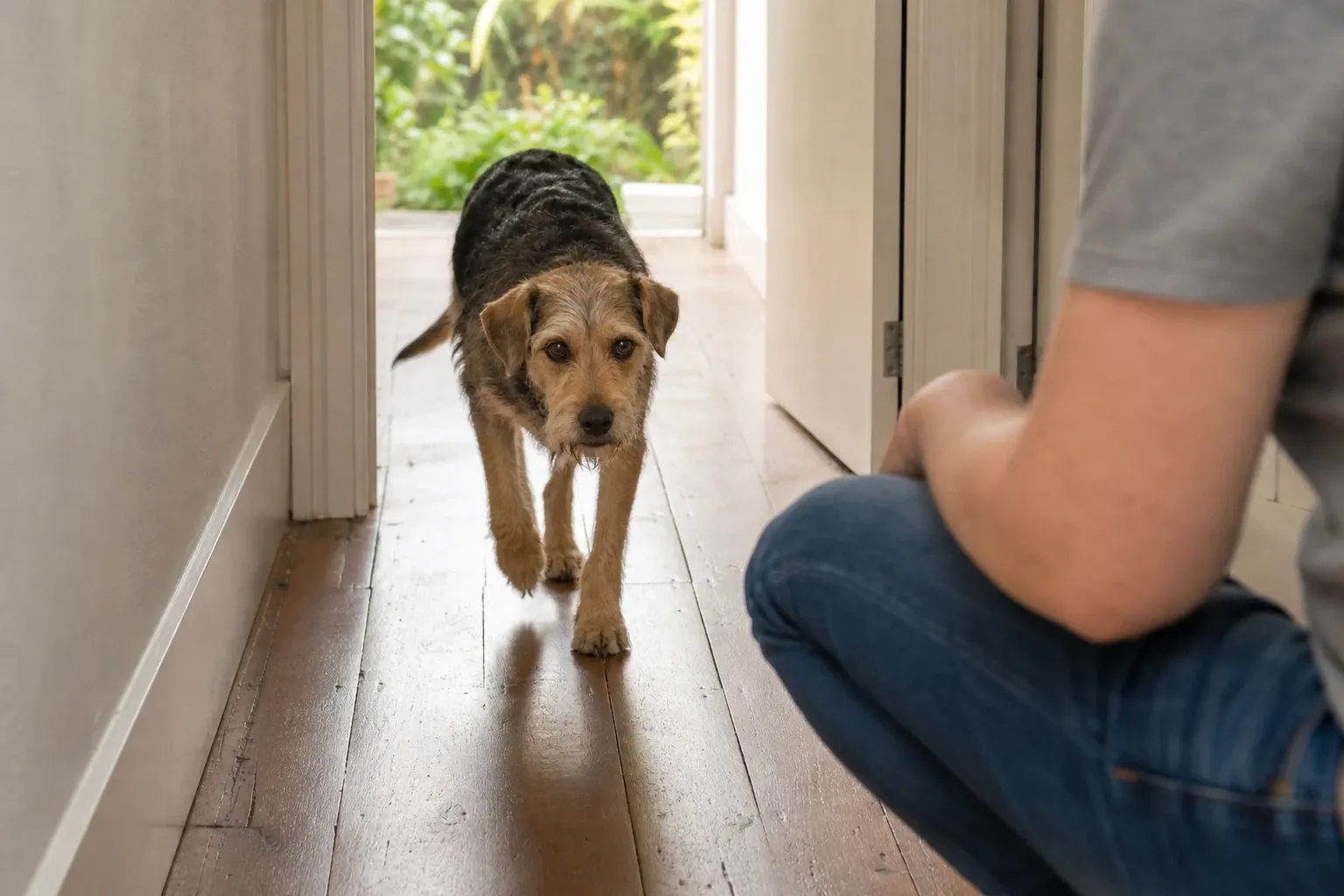
A quiet hallway is the easiest place to start recall, because there’s nothing more exciting than you. Stand a few feet away and say your cue once in a happy voice. When your dog arrives, praise and reward right away.
For a great, fast recall, give a jackpot: several treats one after another. The jackpot technique tells your dog that one was special. The RSPCA suggests running away a couple of paces and getting down low to make coming back more tempting.
Step 2: Play the gotcha game
The gotcha game teaches your dog that being caught is a good thing. When your dog arrives, calmly touch their collar while you feed a treat. Then let them go again.
This matters because many dogs learn to dance just out of reach. If a hand on the collar always means chicken, there’s no reason to dodge.
Step 3: Add distance indoors
Add distance a few steps at a time, then call from other rooms. If your dog hesitates, go back a step and make it easier.
If your dog doesn’t come, don’t repeat the cue. Walk over, guide them gently and try an easier version. Repeating the word teaches your dog it’s optional.
Quick tip: With a helper, take turns calling your dog between you across the house. It’s a fun game of ping-pong with treats.
Step 4: Move to the yard and then a quiet park
Outdoors comes next, and progress usually slows there. That’s normal. Smells, birds and noises compete with you, so go back to short distances and better treats. A puppy who nails it in the kitchen may need to start from scratch on the lawn.
How do I practice recall safely outdoors and off leash?
Safe outdoor recall practice means using a long line in open spaces and only going off leash in securely fenced areas until your dog comes back around distractions.
Using a long line
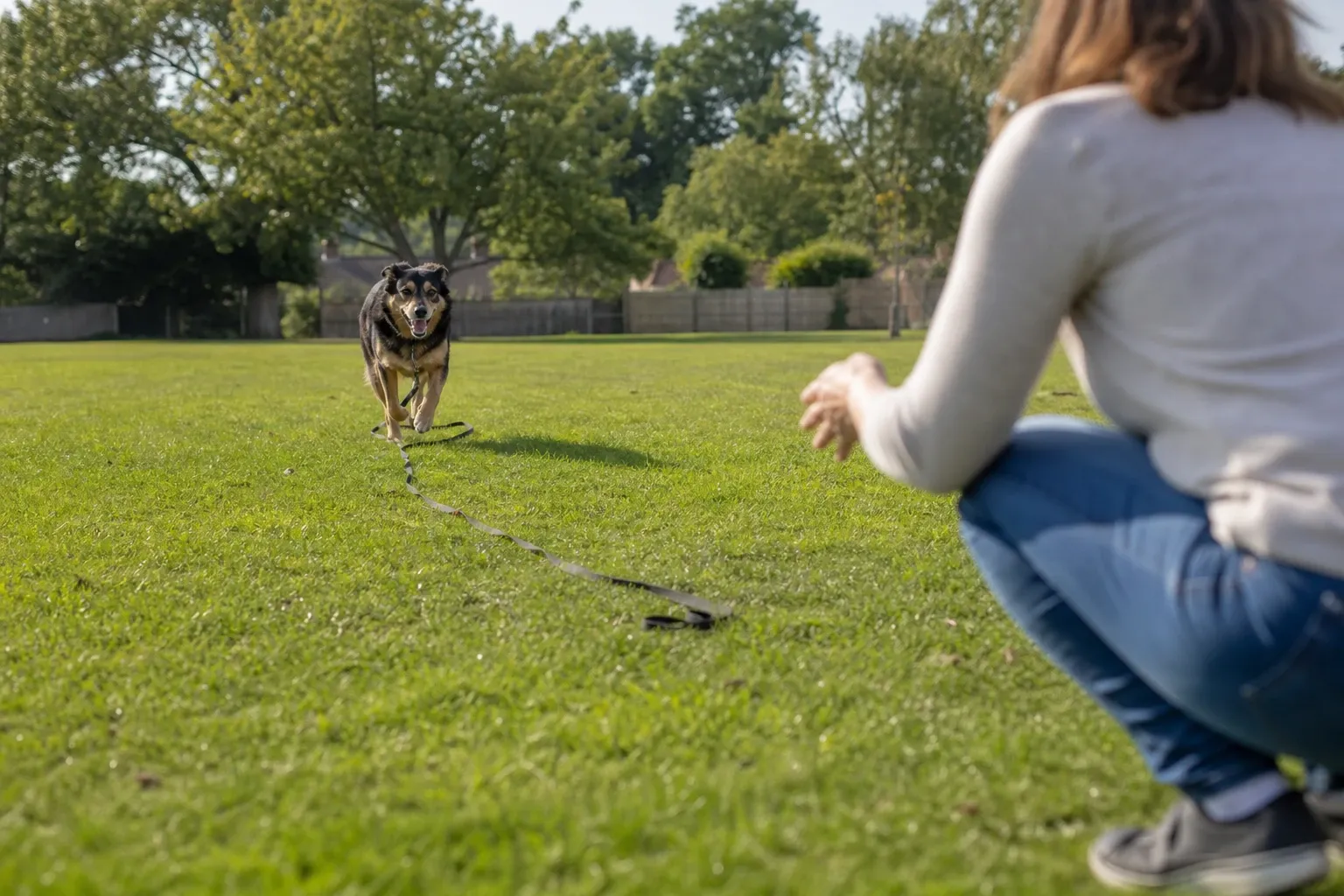
A long line lets your dog explore while you keep control. Let it trail or hold it loosely, call once, and reward well when your dog comes. If they ignore you, gently reel them in and reward anyway. They never get to practice running off.
Match your reward to the distractions. In a busy spot, bring the best treats or a favourite tug toy. For example, at a park with ducks, cheese and a quick game of tug may compete where kibble won’t.
Dog parks, roads and fenced areas
Road safety comes first: never rely on recall near traffic, even with a well-trained dog. Keep your dog leashed near roads, always.
Practice off leash only in secure, fenced areas at first. Save the dog park for last, because it’s one of the hardest places to call a dog away from play. Practice on the long line near the park first.
People often ask about the chances of a dog coming back after running away. There’s no reliable figure, which is the best reason to use a long line until recall is solid. If your dog does run, don’t chase. Many dogs follow a person who runs the other way or crouches down calling happily.
Why is my dog not coming to me when I call?
A dog usually doesn’t come when called because the reward is too weak, the distraction too strong, the cue has been repeated or linked to bad things, or they haven’t practiced there.
Dogs connect the cue with what happens right after. If “come” has meant leaving the park, a bath or a telling-off, your dog may slow down or stay away. Will your dog remember that you yelled? They may not recall the moment, but they can link your voice or the cue with something unpleasant. The RSPCA warns against calling your dog and then telling them off for this reason.
Smell plays a big part too. Dogs follow scent, and outdoors a smell can easily outcompete you. That’s not spite. It’s a dog being a dog.
| Mistake | What your dog learns | Fix |
|---|---|---|
| Repeating the cue | The first call doesn’t count | Say it once, then go get your dog |
| Calling to end fun | Coming back ends the good stuff | Call, reward, then let them play again |
| Calling to scold | Coming is risky | Never punish recall; collect your dog calmly |
| Weak treats outside | You’re less fun than the grass | Use high-value treats or a toy |
| Too far, too soon | Ignoring is possible | Shorten the distance; use a long line |
| New place, no practice | The cue only works at home | Restart easy in each new place |
For example, if your dog comes indoors but not in the yard, treat the yard as a brand-new step one.
How do I teach a stubborn dog to come when called?
A “stubborn” dog is usually just under-trained for that setting, so restart recall with easier conditions and stronger rewards. This approach suits adult dogs with a habit of ignoring the cue.
- Make it easier. Go back indoors, shorten the distance and cut distractions.
- Make yourself more fun. Back away, run a few steps, use a happy voice and play tug as a reward.
- Use resource control. Be the source of the best food and games. Hand-feed some meals as recall practice, and save the top treats for recall only.
- Keep the long line on. Leave it on outdoors until your dog succeeds again and again.
For example, scatter part of breakfast in the yard, then call your dog and hand over a few pieces of chicken when they arrive.
If your dog is reactive (barks or lunges at other dogs or people) or bolts in a panic, a qualified trainer or behaviour professional can help. Talk to your vet if you think pain or a health problem is involved, such as a dog who suddenly stops coming.
How long does recall training take, and what are the 7-7-7 and 3-3-3 rules?
Recall training takes days to weeks for a basic indoor response, months for a reliable outdoor one, and light practice for life. Every dog is different, so let your dog set the pace.
For your training timeline, aim for a few short sessions a day. Move to the next level when your dog gets it right about 8 times out of 10. If they struggle, step back.
The 3-3-3 rule is a common guide for rescue dogs: about three days to decompress, three weeks to learn the routine and three months to feel at home. The 7-7-7 rule is a puppy socialising idea, often described as meeting a variety of people, places and experiences. Neither is a recall plan. They’re useful reminders, though, that a new dog needs time to bond before off-leash work.
For example, a newly adopted dog can start hallway recall in the first week, but should stay on a leash or long line outside for a good while.
Do I need an app or online course for recall?
You don’t need an app or course to teach recall; the free steps on this page work without them. Some owners just like video demos and a set structure.
Apps like Puppr offer short lessons with video. Puppr’s pricing changes, so check the current price in your app store before subscribing.
Brain Training for Dogs by Adrienne Farricelli is one option: self-paced games and obedience lessons you follow at home. Our Brain Training for Dogs review covers what’s inside and who it suits.
Whatever you compare, look for reward-based methods, clear steps and a way to ask questions. For example, a busy owner who likes a checklist may value a course’s structure more than someone happy with a notebook.
Check the current Brain Training for Dogs course, price and refund terms on the creator’s site.
See what's inside Brain Training for Dogs60-day money-back guarantee
Where does recall fit in your dog’s training?
Recall is one of the core skills in dog and puppy training at home, and it gets easier when your dog already knows a few basics. A solid stay cue helps with the helper game, and learning to walk on a loose leash makes long-line practice calmer. If you’re starting with a young pup, our guide to basic puppy commands shows which cues to teach first.
Your next step is simple: pick your recall word today and do one 2-minute hallway session with your best treats.
Owners also ask
Should I use my dog's name as the recall cue?
It’s better not to rely on your dog’s name alone. You say it all day, often when you don’t need anything, so it loses meaning. Use the name to get attention if you like, then follow with a separate recall word you use only for coming to you.
Can I teach an older dog to come when called?
Yes, adult and senior dogs can learn recall with rewards and short sessions. If an old cue has bad associations, choose a fresh word and start indoors. Keep sessions gentle for older dogs, and ask your vet if stiffness or hearing loss might be slowing your dog down.
What treats work best for recall training?
Small, soft, smelly treats work best, such as pea-sized pieces of cooked chicken, cheese or hot dog. Save them just for recall so they stay special. Cut back a little on meals if you train often, and some dogs prefer a quick game of tug instead of food.