Heads up: some links here are affiliate links. If you buy through one we may earn a commission, at no extra cost to you. More
Brain Training for Dogs: A $67 online course (regular price $127) with 21+ brain games across seven levels, obedience lessons, trick videos and a members' forum, with a 60-day refund window.
See what's inside Brain Training for Dogs60-day money-back guarantee
How do you crate train a Lab puppy, step by step?
Crate training a Lab puppy comes down to three things: make the crate pleasant, add time slowly and don’t reward whining. It suits puppies and adult dogs alike. If you want the full basics first, start with our crate puppy training guide.
Make the crate a good place
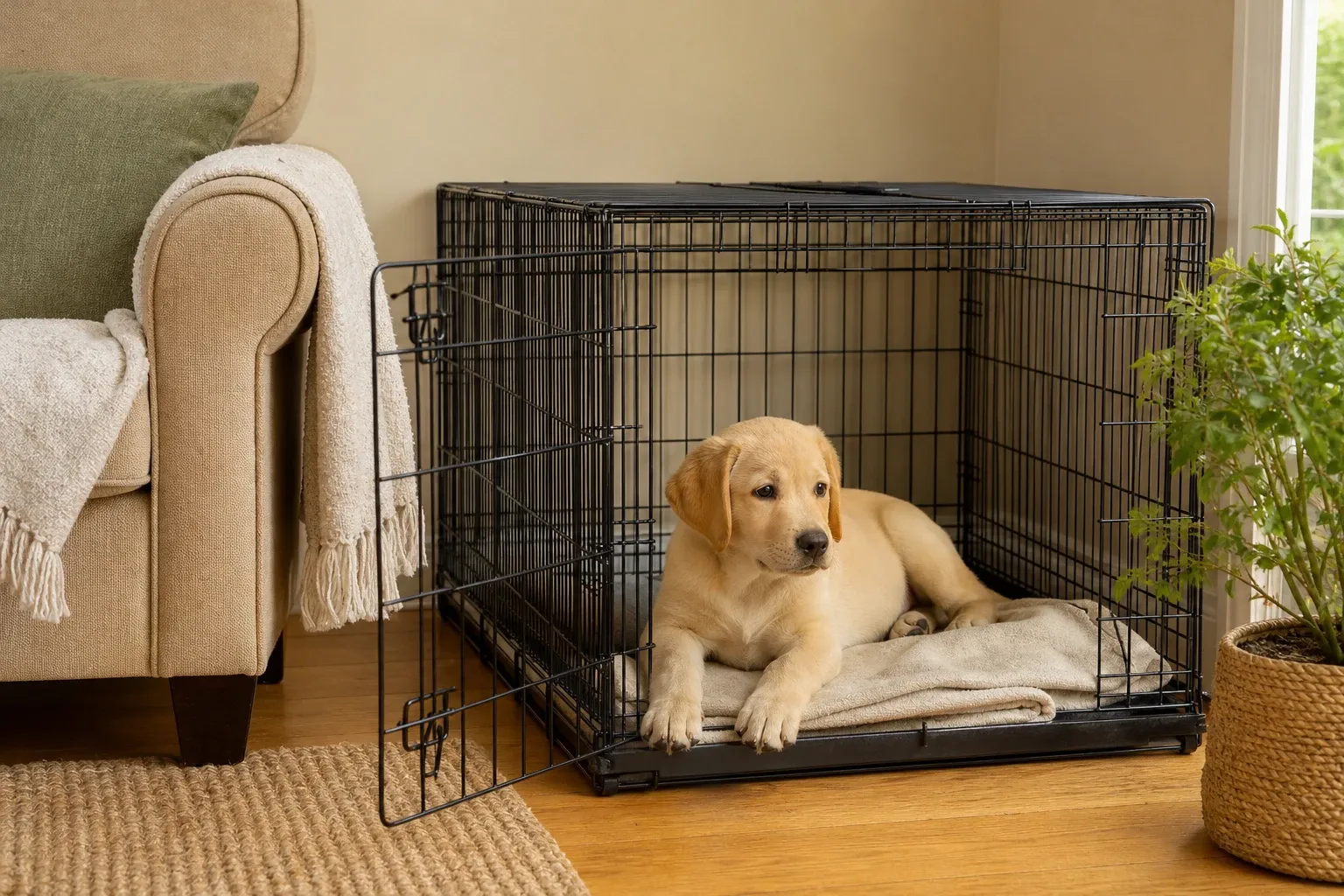
A crate works best as a safe den, a small, cosy spot your puppy chooses to go into. Toss treats or bits of kibble inside, serve every feed time in the crate, and hand over a toy or a frozen stuffed Kong only in there.
Until the chewing stage passes, skip the soft blanket. A thin mat or a carpet square is much harder to shred and swallow.
Add time in small steps
Build alone time in small steps: seconds, then minutes, then short trips out of sight. Start with the door closed for ten seconds while you sit beside it. Then try a minute while you read. Next, step into the kitchen and come back before your puppy fusses.
Quick tip: Leave the room while your puppy is busy with a chew, and come back before it’s finished.
Handle whining without rewarding it
When your puppy whines, wait for a short pause before you open the door, so quiet is what gets the door opened. Before that, ask yourself if they need the toilet. If it’s been a while, take them out on a lead, keep it boring and bring them straight back.
What if your puppy hates the crate? Take the door off for a few days. Feed meals just inside the opening, then further back. Close the door only once your puppy is walking in on their own. That’s best for puppies who were shut in too long too soon.
How big of a crate for a lab puppy?
Most Lab puppies need a 42-inch crate with a divider. A Labrador Retriever usually weighs about 55 to 80 pounds as an adult.
The crate size to aim for is room to stand, turn around and lie stretched out. Any bigger, and a puppy may use one end as a toilet. That’s why you move the divider back as your puppy grows. It’s like buying school shoes with room to grow, except you can adjust the fit each week.
For longer stays, such as a work-from-home morning, attach an exercise pen to the open crate. Your puppy gets space to play and the crate stays a bed. This setup is best for busy households.
How does crate size and training differ by breed?
Crate training steps are the same for every breed. What changes is crate size, session length and a few quirks. Treat these as tendencies, not rules. Your own dog may not fit the pattern.
Labs and golden retrievers
Labs and the Golden Retriever tend to be chew-happy and social. Short, frequent sessions with a chew work well. For example, offer a chew during a 15-minute stay while you cook dinner nearby.
Small breeds like dachshunds and French bulldogs
Small breeds like the Dachshund and French Bulldog have small bladders, so they need shorter stays and a well-set divider. A 24-inch crate often fits. Flat-faced dogs like Frenchies do best in a cool, airy spot. Ask your vet if breathing ever seems hard.
German shepherds and huskies
The German Shepherd and Siberian Husky usually settle better after exercise and a sniff walk, and both can be vocal. Try a 20-minute walk plus a short training game before crate time.
Giant breeds and big puppies
Giant breeds can outgrow a crate fast, so plan for size from day one. A 48-inch crate with a divider, or larger, plus thick, chew-proof bedding that’s kind on joints, helps big pups. Check the fit every couple of weeks.
What does the first night home look like?
The first night home goes best with the crate right next to your bed, a last potty trip and the expectation of a night or two of fuss. Here’s a simple timeline:
- Evening: play, then a calm hour.
- Before bed: a last potty trip.
- Bedtime: crate by the bed, a chew, your hand by the door if needed.
- Night: one or two quiet potty trips for very young pups. Keep the lights low and no play.
- Morning: straight outside.
How long should you let a puppy cry? Answer short whines calmly. If crying is long and frantic, a potty trip or comfort is fine. See our plan for crate training an 8 week old puppy for more detail on very young pups.
Should rescue dogs sleep in a crate the first night?
A rescue dog can find a crate safe if it’s introduced gently, but don’t force it. Leave the door open by your bed and let them choose. A bed behind a baby gate works too.
What is the 3-3-3 rule for rescue dogs?
The 3-3-3 rule is a loose guide. It suggests about 3 days to decompress, 3 weeks to learn your routine and 3 months to feel at home. Some dogs move faster and some much slower.
How long can a puppy stay in a crate?
A daytime rule of thumb is about one hour per month of age, with a lower cap for very young pups. Bladder control grows with age, so an 8-week-old needs breaks much more often than a 5-month-old.
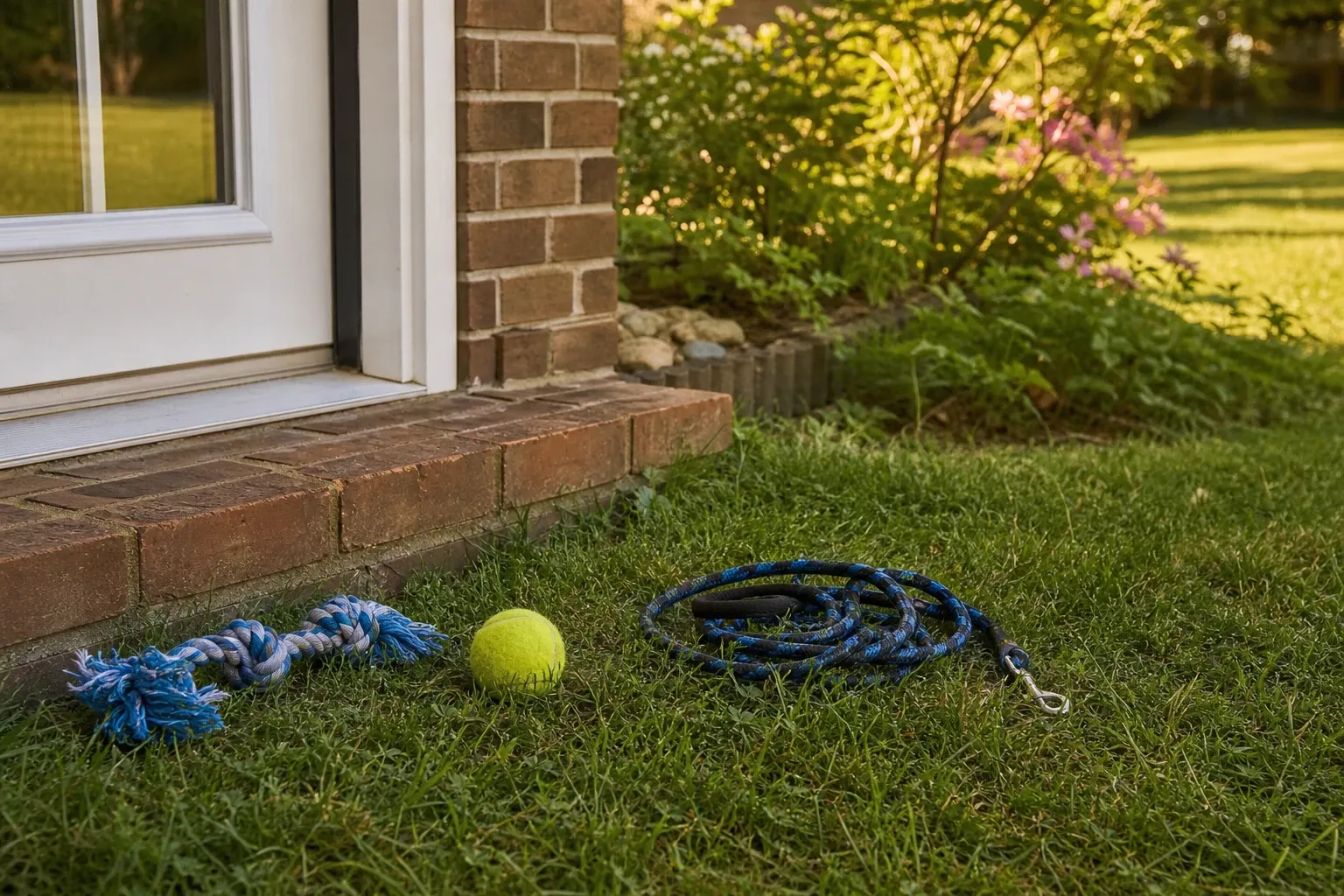
Can you leave a puppy in a crate for an hour? Yes, for most puppies who have just been to the toilet and had some play. For example, after a garden potty trip and a game, a 3-month-old Lab can usually nap through an hour-long errand.
Longer stays need a midday break or a helper. The crate is a resting spot, never a stand-in for exercise, play and company.
When can you stop crating a Lab puppy?
You can stop crating a Lab puppy once they’re calm and have gone several weeks with no accidents or chewing damage. Many Labs are fairly reliable with potty training around 4 to 6 months. Chewing can last much longer, often into the second year.
Move forward in steps. First, give the puppy a gated, puppy-proofed room. Then allow short free time while you’re home, and later while you’re out. If shoes start disappearing, go back a step for a while.
Many adult dogs keep using an open crate as a bed or for travel.
Crate size and session guide by breed
Crate size and early session length vary mostly with adult size and age. Use these as starting points, not rules.
| Breed | Typical adult size | Typical crate | Early session length | Common quirk |
|---|---|---|---|---|
| Labrador Retriever | 55–80 lb | 42 in, divider | 5–30 min, building up | Chewing, food-driven |
| Golden Retriever | 55–75 lb | 42 in, divider | 5–30 min | Social, dislikes isolation |
| German Shepherd | 50–90 lb | 42–48 in | 5–20 min after exercise | Vocal, alert |
| Siberian Husky | 35–60 lb | 36–42 in | 5–20 min after exercise | Howling, escape attempts |
| Dachshund | 11–32 lb | 24–30 in | 5–15 min | Small bladder |
| French Bulldog | under 28 lb | 24–30 in | 5–15 min | Heat-sensitive |
| Giant breeds | 100 lb+ | 48 in+ | 5–20 min | Fast growth, joints |
| Rescue puppy | varies | sized to the dog | start with door open | May need extra time |
For a rescue puppy, crate training means going slower. Use treats, leave the door open for the first days and follow the dog’s comfort.
Where crate training fits in your puppy’s bigger plan
Crate training is one piece of raising a calm puppy, alongside potty training and simple cues. Our step-by-step guide to crate training a puppy covers the core method that every breed in this guide builds on. Once the crate is settled, you can move on to everyday dog & puppy training like sit, stay and come.
Some owners like a structured course for that next stage. Brain Training for Dogs is a self-paced online course with game-based modules. The maker says it includes 21 games across 7 modules, plus a bonus behaviour course. This assessment uses published course information; we have not worked through Brain Training for Dogs with a dog of our own.
You can see the current Brain Training for Dogs modules, price and 60-day refund terms on the creator’s site.
See what's inside Brain Training for Dogs60-day money-back guarantee
If your puppy pants, drools heavily or panics in the crate, stop crate sessions and talk to your vet.
Owners also ask
Should I put water in my puppy's crate?
For short daytime stays, offer a drink just before and just after crate time, and ask your vet if you’re unsure. For longer stays, a clip-on bowl helps prevent spills. Many owners lift water an hour or two before bedtime to cut night potty trips, but always offer a drink beforehand.
Should I crate my puppy during the day?
Yes. Short daytime crate naps help a puppy learn to settle and rest, and puppies need lots of sleep. Mix crate time with play, training and potty trips. Keep each stay within your puppy’s age limit, and add a midday break or helper for longer absences.
Is it cruel to crate a puppy at night?
A crate isn’t cruel when it’s the right size, introduced kindly and placed near you at night. Many puppies sleep better in a cosy den. It becomes unfair when a dog is shut in too long, skips exercise and company, or shows panic. Then ease off and seek advice.