Heads up: some links here are affiliate links. If you buy through one we may earn a commission, at no extra cost to you. More
Brain Training for Dogs: A $67 online course (regular price $127) with 21+ brain games across seven levels, obedience lessons, trick videos and a members' forum, with a 60-day refund window.
See what's inside Brain Training for Dogs60-day money-back guarantee
Why is my puppy biting so much?
Puppy biting is normal. Puppies use their mouths to play, explore and test the world, a bit like toddlers who grab everything in sight. Most nipping is play, not a sign that something is wrong.
Play and exploring with the mouth
Puppy nipping is how young dogs play with littermates and learn how hard is too hard. Your hands, sleeves and shoelaces just look like the most fun toys in the room. For example, a puppy who pounces on your trouser leg as you walk is playing chase, not being naughty.
Teething discomfort
Teething makes puppies want to chew and bite more, because their gums feel sore while adult teeth come through. Chewing seems to bring some relief, so a teething puppy may gnaw on anything nearby, including fingers.
Overtired and overexcited puppies
An overtired puppy often bites harder and more often, especially in the evening. Young puppies need a lot of sleep. Without enough, they get wound up and mouthy, a pattern many owners call the “witching hour”.
Play-biting looks loose and wiggly. Biting with a stiff body, a hard stare or growling is different, and it’s worth watching closely.
How do I get my puppy to stop biting? Step by step
The most reliable way to stop puppy biting is a simple routine: prevent bites, redirect to a toy, pause when teeth hit skin, and reward gentle behaviour. This works for young puppies and busy households alike, as long as everyone does it the same way.
1. Set up the day to prevent bites
Management means arranging your home so biting has fewer chances to happen. Use a baby gate or an exercise pen (a small, fenced play area) when you can’t watch your puppy. A short tether near you can help during calm time. Plan naps after play and walks, so your puppy doesn’t tip into overtired biting.
2. Redirect to a toy
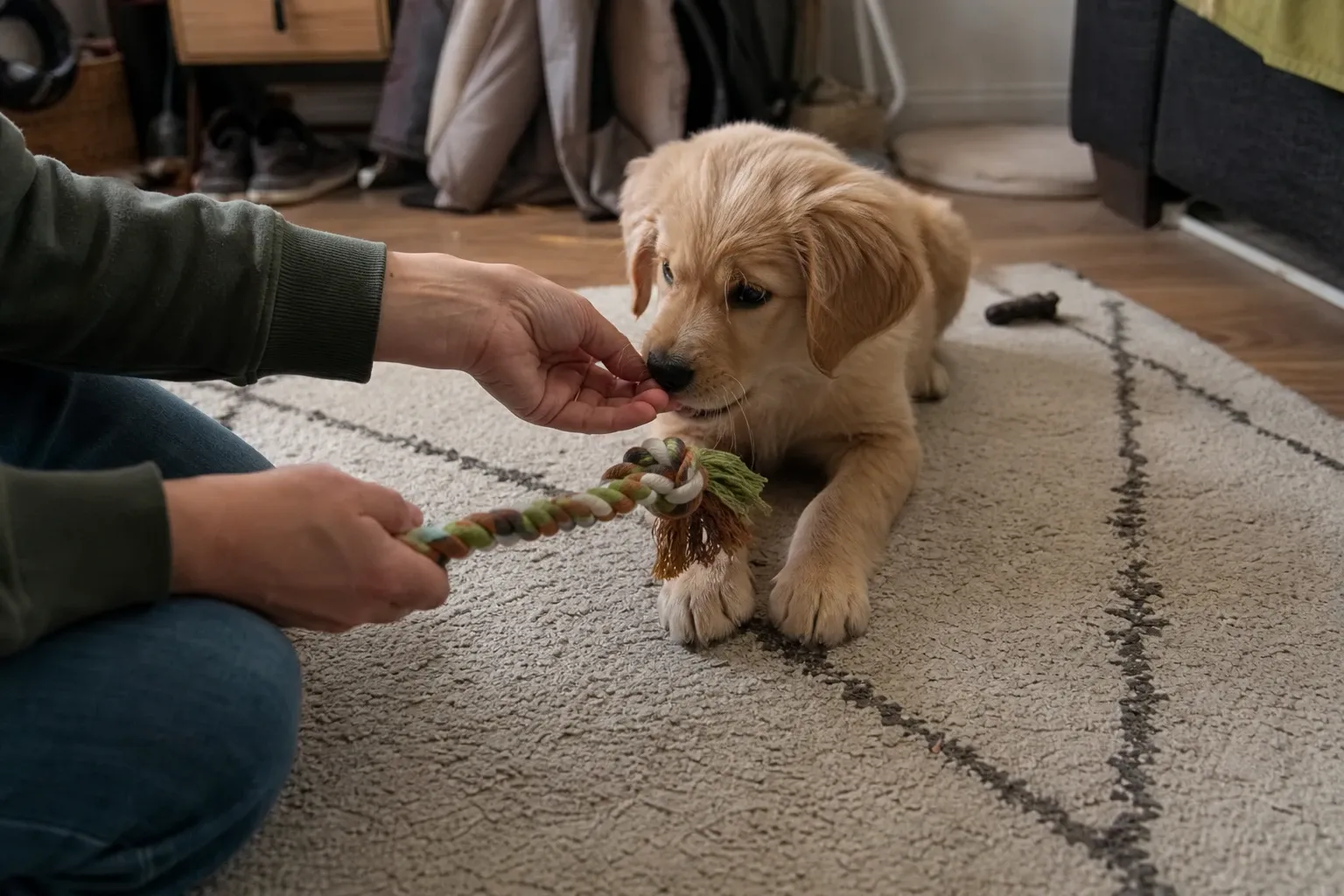
Redirection means swapping your hand for something your puppy is allowed to bite. Keep chew toys or a soft tug toy in your pocket. The moment teeth touch skin, offer the toy and make it fun to grab. For example, wiggle a tug toy along the floor so it’s more exciting than your fingers.
3. Pause play when teeth touch skin
A short pause teaches your puppy that biting ends the fun. If your puppy ignores the toy and keeps biting, calmly stand up, fold your arms or step behind a gate for 10 to 20 seconds. Then come back and start again with the toy. Gently moving away is fine; shoving or pushing tends to look like rough play and can wind your puppy up more.
4. Reward gentle mouths and calm
Positive reinforcement means rewarding the behaviour you want so it happens more often. Praise or give a small treat when your puppy licks instead of bites, chews a toy, or lies on a mat. You’re teaching what to do, not only what to stop.
Quick tip: Expect progress over weeks, not days. Agree on the same steps with everyone in the house so your puppy gets one clear message.
Should I discipline my puppy for biting?
No, you don’t need to punish a puppy for biting. Calm teaching and redirection work better and keep your puppy’s trust in your hands.
What to avoid
Harsh responses tend to raise excitement or fear, and both can lead to more biting. Skip these:
- Hitting or tapping the nose
- Holding the mouth shut
- Pushing or pinning the puppy
- Shouting or spraying water
A scared puppy may learn that hands coming close are a threat. That’s the opposite of what you want, especially in homes with children.
Does yelping “ouch” work?
A calm “ouch” works for some puppies and makes others more excited. Try it once or twice. If your puppy pauses and softens, follow up with a toy. If they bite harder or bounce around, drop the “ouch” and use a quiet pause instead. For example, a high-energy puppy might treat your yelp like a squeaky toy.
Teething: chew options that save your hands
Teething puppies need safe things to chew so they leave your hands alone. Having good chew options ready is the easiest win for sore fingers.
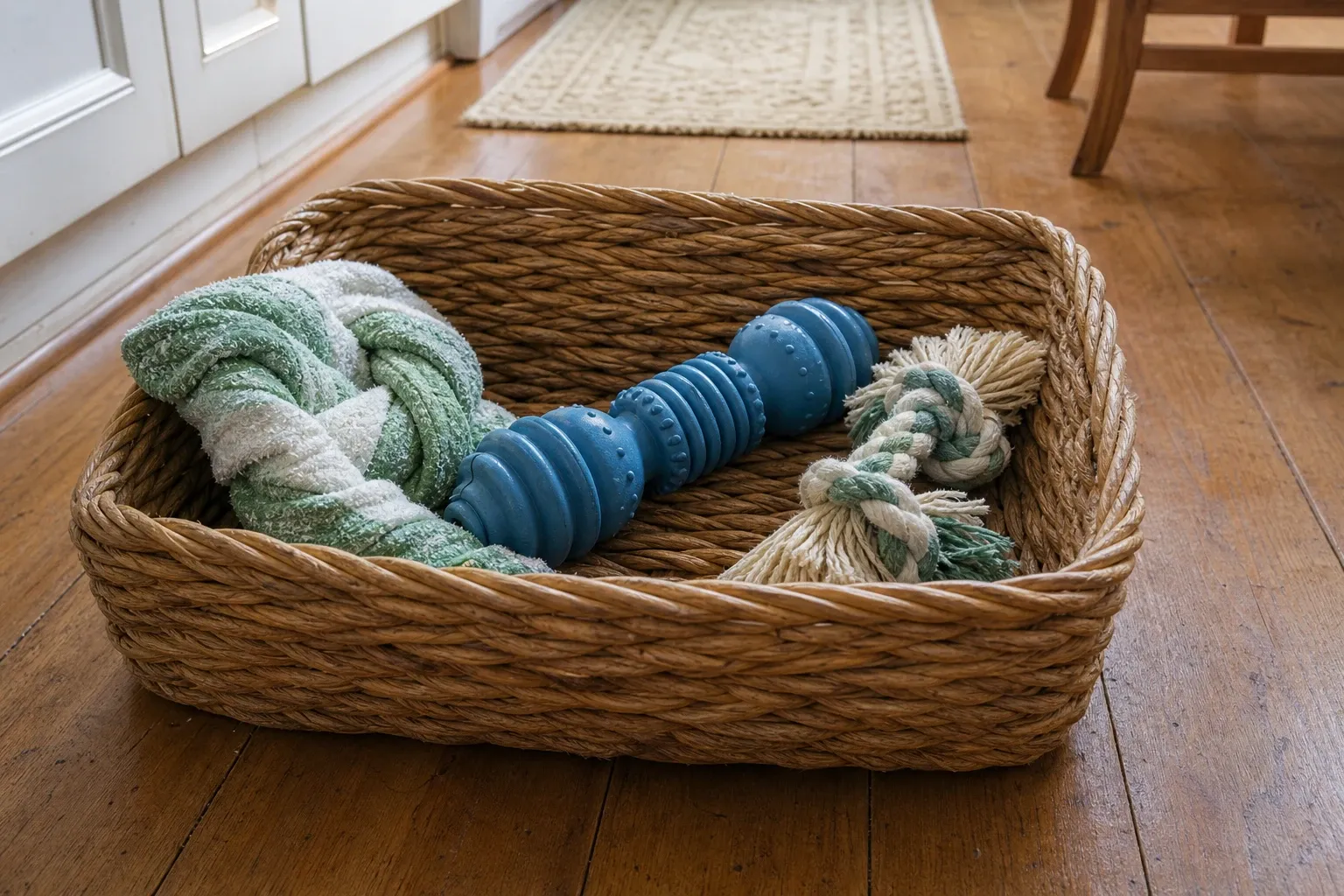
Good choices to try:
- A damp washcloth, twisted and frozen
- Firm rubber chew toys made for puppies
- Soft rope or fabric tug toys for play with you
- Chews you can stuff with a little of your puppy’s food
Rotate toys every few days so they feel new. Keeping just three or four out at a time helps. For example, put Monday’s toys away and bring out a different set on Thursday.
Supervise chewing, and pick toys too big to swallow. Take away anything that’s breaking into pieces. If your puppy seems in real pain, isn’t eating, or has bleeding gums that worry you, check with your veterinarian.
At what age should a puppy stop biting?
Most puppies mouth much less once their adult teeth are in, usually somewhere around 4 to 6 months. Timing varies a lot between puppies, and steady teaching matters more than the calendar.
| Puppy age | What’s typical | What helps most |
|---|---|---|
| 8 to 12 weeks | Lots of play-biting, short attention | Naps, pens, toys in reach |
| 3 to 6 months | Teething, chewing peaks | Frozen cloths, rubber chews, pauses |
| 6 to 9 months | Mouthing fading; bursts when excited | Exercise, structure, rewards for calm |
| 9 months and older | Occasional mouthing in play | Keep rules the same; get help if it’s hard or frequent |
What if my 7-month-old puppy is still biting?
A 7-month-old puppy who still bites usually needs more outlets and more structure, not punishment. Add a daily sniffy walk, a short training game and planned rest. Keep redirecting every time. For example, ask for a sit before tug, and stop the game if teeth land on skin. Our guide to basic puppy cues gives easy things to ask for instead.
What is the 7 7 7 rule for puppies?
The 7 7 7 rule is a loose idea some owners use for a new puppy’s early experiences, such as meeting many people, surfaces and sounds. It’s a rough guide to settling in and socialising, not a training schedule or a rule about biting.
If you’d like structured, game-based practice at home, Brain Training for Dogs is one self-paced online option. The maker says its 21 games across 7 modules cover obedience and behaviour training. It’s a practice tool for everyday manners, not a fix for hard or worrying bites.
When is puppy biting a reason to call a professional?
Puppy biting needs a professional when it looks like fear, guarding or real force rather than play. Use this checklist.
| Usually normal play-biting | Call a professional |
|---|---|
| Loose, wiggly body | Stiff body, freezing or hard stare |
| Stops with a toy or a pause | Growling or snapping over food or toys |
| Light pressure, rare marks | Bites often break skin |
| Worse when tired or excited | Biting when scared or cornered |
| Slowly getting better | Sudden change in behaviour |
Talk to your veterinarian first if biting starts suddenly or seems linked to pain, such as biting when touched in one spot. For guarding, fear or serious bites, look for a certified dog trainer who uses reward-based methods, or a qualified behaviour professional. An online course is not the right tool here.
Breed alone doesn’t decide whether a dog bites. Early teaching, good management and meeting your puppy’s needs matter far more.
Where puppy biting fits in your training plan
Teaching a soft mouth is one early piece of everyday puppy training. The same calm habits, short sessions and rewards carry into every other skill. For the bigger picture, start with our guide to training your dog or puppy at home.
Mouthy puppies often jump up too, since both come from excitement. Our guide on stopping a dog jumping on people uses the same reward-and-pause ideas, so practising one helps the other.
If you’d like a structured plan for the skills that follow, Brain Training for Dogs by Adrienne Farricelli is one option: self-paced games and obedience lessons you follow at home. Our Brain Training for Dogs review covers what’s inside and who it suits.
See the current Brain Training for Dogs course, price and refund terms on the creator’s site.
See what's inside Brain Training for Dogs60-day money-back guarantee
Whichever path you choose, start today with toys in your pocket and a gate set up. If any bite worries you, call a professional sooner rather than later.
Owners also ask
How long does puppy biting last?
Puppy biting usually eases as adult teeth come in, often around 4 to 6 months, though some puppies mouth for longer when excited. Steady redirection to toys, short pauses and enough sleep help it fade. If biting stays hard or frequent past this stage, talk to a reward-based trainer.
Should I give my puppy a time-out in a crate?
A crate shouldn’t be used as punishment, because you want your puppy to feel safe there. If your puppy is overtired and biting, calmly offering a chew and a nap in the crate is fine. Frame it as rest, not banishment, and keep it quiet and kind.
Can kids help with puppy bite training safely?
Children can help with adult supervision. Give them a tug toy to offer, and teach them to stand still and fold their arms if the puppy nips. Avoid chasing games and running, which excite puppies. Young children and puppies should never be left alone together.