Heads up: some links here are affiliate links. If you buy through one we may earn a commission, at no extra cost to you. More
Brain Training for Dogs: A $67 online course (regular price $127) with 21+ brain games across seven levels, obedience lessons, trick videos and a members' forum, with a 60-day refund window.
See what's inside Brain Training for Dogs60-day money-back guarantee
What does a good puppy potty schedule look like?
A good puppy potty training schedule ties outdoor potty breaks to the moments your puppy is most likely to go, with the clock as a backup. Puppies don’t pee on a timetable. They pee when their body tells them to, and that happens at fairly predictable times.
Triggers beat clock times
Potty triggers are the moments right after something happens: after waking, after meals, after drinking, after play and before bed. Go out at each one, even if you were outside 20 minutes ago. Then use the clock to fill any long gaps between triggers.
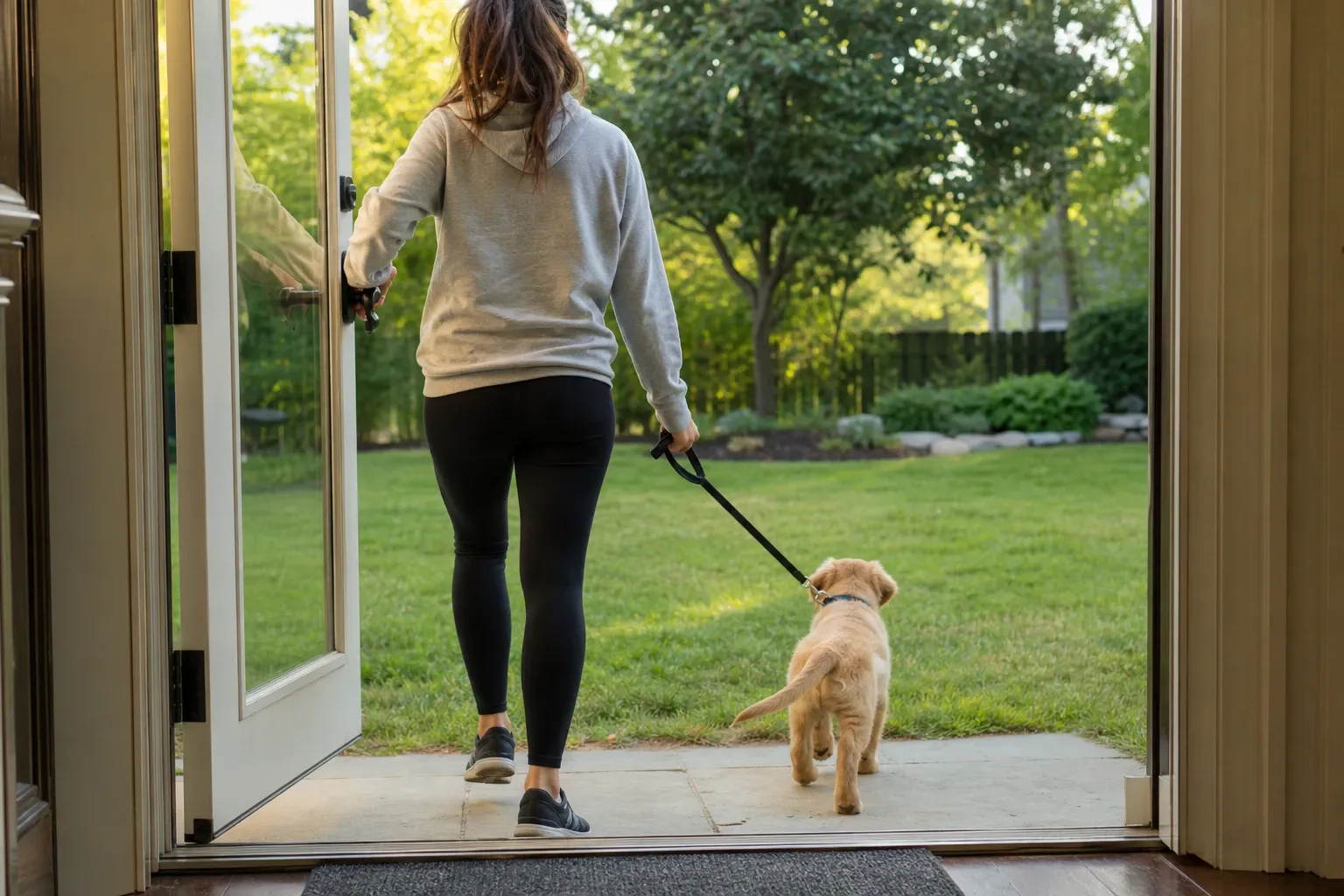
Take your puppy to the same potty spot every time. The smell helps remind them why they’re there. When they finish, reward immediately with a treat and some quiet praise, right there outside. A treat handed over back in the kitchen comes too late to teach anything.
Example: Your puppy wakes from a nap at 2:10. You carry them straight out, wait, they pee, and they get a treat within a second or two.
The simple age rule: months plus one
The age in months plus one rule gives a rough ceiling for the hours between breaks. A 2-month-old might manage up to about 3 hours. A 4-month-old might manage up to about 5. That number is the most your puppy might hold, not a goal. While they’re awake and active, go out much more often than that.
This guide suits puppies and their families. Busy households get the most from triggers, because you don’t have to keep watching the clock.
When should you start potty training a puppy?
Start puppy potty training the day your puppy comes home, which is often around 8 weeks. There’s no need to wait for them to settle. The first trip outside can happen the minute you get out of the car.
In the early weeks, you’re mostly arranging things so mistakes are hard to make. That means frequent trips, close supervision and a crate or small pen for rest. You’re building a habit, not expecting a puppy who’s reliable yet. Bladder control by age improves slowly, and young puppies often don’t know they need to go until they’re already going.
Potty training usually takes several months. Some puppies need longer. Accidents along the way are normal and say nothing bad about you or your puppy. For a closer look at the first days, see our guide to potty training a puppy at 8 weeks old.
Example: On day one, you carry your puppy to the potty spot before you go inside. You wait a few minutes, then reward if they go.
Sample potty training schedule by age (8 weeks to 6 months)
The chart below gives a starting point for each age. Adjust it if your puppy has more accidents, or fewer.
| Age | Break while awake | Meals per day | Naps and crate | Night trips |
|---|---|---|---|---|
| 8 to 12 weeks | Every 1 to 2 hours, plus triggers | 3 to 4 | Lots of naps; short awake spells | 1 to 2 |
| 3 to 4 months | Every 2 to 3 hours, plus triggers | 3 | Naps after play and meals | Usually 1 |
| 4 to 6 months | Every 3 to 4 hours, plus triggers | 2 to 3 | Fewer, longer naps | 0 to 1 |
Ask your vet about the right amount and type of food. The meal counts above are typical feeding schedule patterns, not a rule.
8 to 12 weeks
Puppies aged 8 to 12 weeks need the most trips, because their bladders are tiny. Here’s a sample day for a 10-week-old who wakes at 6:00:
- 6:00 wake up, straight outside
- 6:15 breakfast, then outside
- 6:45 play, then outside
- 7:15 to 9:00 nap in the crate, outside on waking
- 9:30 outside again
- 11:30 lunch, then outside, then a nap
- 2:00 wake up, outside, play, outside
- 4:30 dinner, then outside
- 6:30 take up water
- 8:30 to 9:00 play and calm time, with breaks
- 10:00 bedtime potty trip, then the crate
- About 1:00 to 2:00 quiet night trip
To shift the whole day, move every time by the same amount. If you wake at 7:30, add 90 minutes to each line. Breakfast becomes 7:45 and bedtime becomes 11:30. The gaps stay the same, and the gaps are what matter.
3 to 4 months
Puppies at 3 to 4 months can stretch to breaks every 2 to 3 hours while awake, but the triggers still apply. Keep the nap schedule regular, and keep going out after every meal and play session.
4 to 6 months
Puppies at four to six months often manage 3 to 4 hours between breaks while calm. Many no longer need a night trip. Watch for regression around teething, travel or a change in routine.
How long can a puppy hold pee at night?
At night, a puppy can usually hold their bladder a little longer than during the day, because sleep slows things down. Even so, young puppies still need help getting through until morning.
A 3-month-old overnight
A 3-month-old can often manage about 3 to 4 hours overnight, so plan on one or two trips. Some puppies do better than that, and some need more. Let your own puppy’s dry nights set the pace.
Night-waking timing and a calm routine
A calm night routine makes night trips quick. Lift water about two hours before bed. Do a bedtime potty trip right before sleep. For night trips, carry or lead your puppy out with the lights low. Keep your voice soft and give a small reward. Then go straight back to the crate, with no play and no chat.
Once your puppy has stayed dry for several nights in a row, set the alarm 15 to 30 minutes later. Keep creeping it later until you can drop the trip.
Example: You set an alarm for 1:30. After a week of dry crates, you move it to 2:00.
If your puppy suddenly needs many more trips, or seems uncomfortable when peeing, check in with your vet.
How do you handle the crate, including the first night home?
A crate gives your puppy a cosy place to rest. Most puppies avoid soiling where they sleep, so it also helps them learn to hold it. It should feel like a bedroom, never a punishment.
How long to let a puppy cry on night one
On the first night home, there’s no set number of minutes to let your puppy cry. Instead, try this plan:
- Put the crate right beside your bed, so your puppy can hear and smell you.
- If they cry, take them out once for a quiet potty trip, in case they really need to go.
- Back in the crate, rest your fingers by the door and speak softly for a moment.
- Don’t let the crying build into long, rising panic.
Some puppies are in real distress: frantic, nonstop crying, drooling or trying to escape. Those puppies need a gentler approach, such as sleeping beside the crate for a few nights. Waiting it out isn’t the answer for them. For more detail, see our plan for crate training a puppy at night.
Crate size and using it for rest
Get the crate size right: just big enough for your puppy to stand, turn around and lie down. If it’s too big, they can pee in one corner and sleep in another. Many crates come with a divider panel, so you can make the space bigger as your puppy grows.
What is the 7-7-7 rule for puppies?
The 7-7-7 rule is a loose guide to settling in. It suggests that a new dog tends to feel unsure for roughly the first seven days, starts learning the routine over about seven weeks, and feels fully at home by about seven months. It’s a handy way to set expectations, not a scientific timeline.
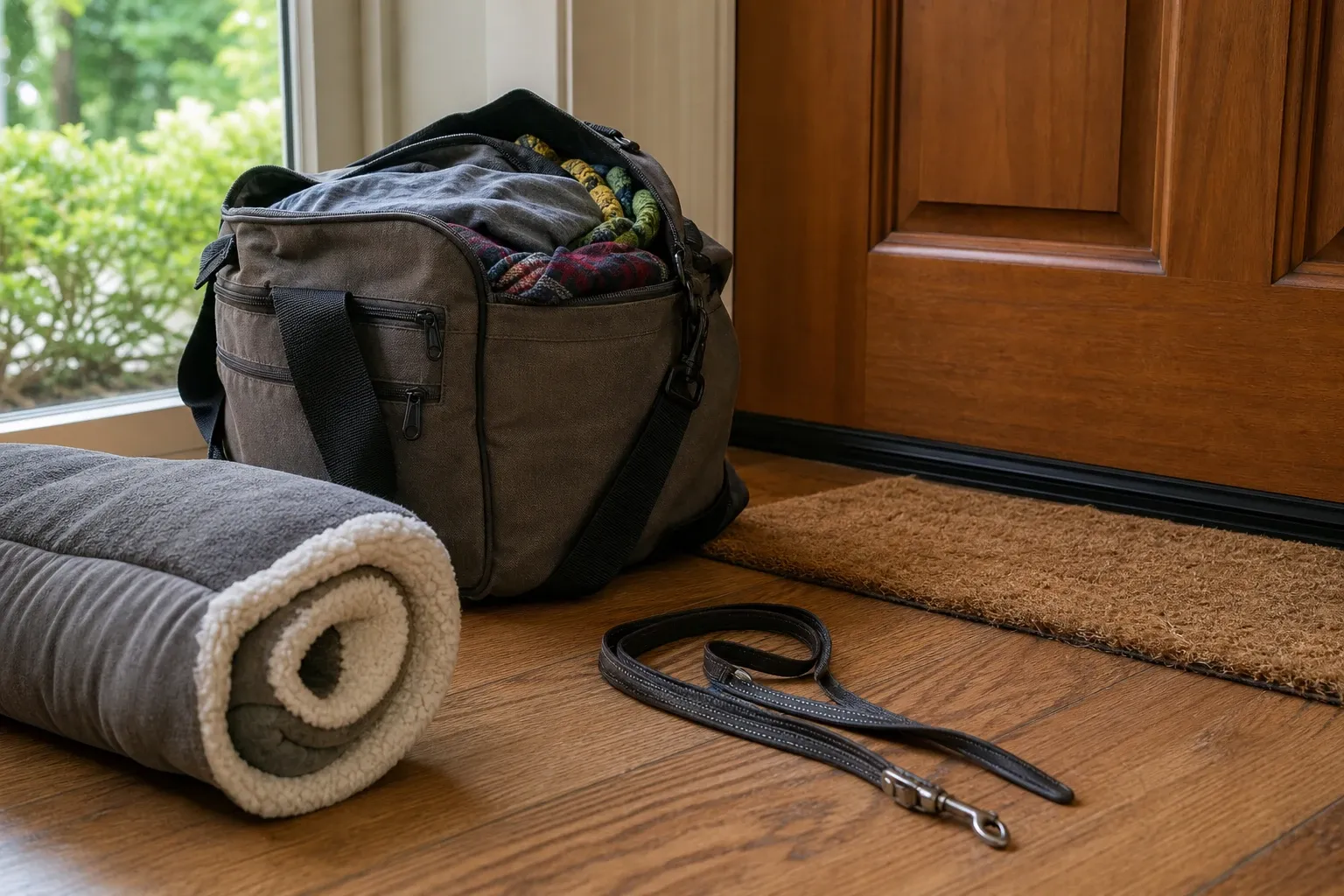
For your puppy potty training schedule, it’s a reminder that progress can wobble. A move, visitors, a holiday or a new sitter can bring back accidents. When that happens, go back to more frequent trips and closer supervision for a while. Then stretch the gaps again.
Example: After a weekend away, your 5-month-old has two accidents. You switch back to breaks every 2 hours for a few days.
How do you adapt the schedule for work, small breeds or setbacks?
The same schedule can bend to fit your life, as long as your puppy never has to wait longer than their bladder can manage.
Working owners
If you work long days, plan for a midday visitor. That could be a dog walker, a neighbour or a relative. A full workday is far longer than a young puppy can hold. Another option is a safe puppy pen with a bed at one end and a potty area at the other. Pad potty training a puppy explains how to set up that potty area, and how to move your puppy from pads to the outdoors later.
Small versus large breeds
Small breeds often need more frequent trips than large ones. Their bladders are smaller, and accidents are easy to miss. If you have a toy breed, use the shorter end of each range in the age chart.
When accidents keep happening
If accidents keep happening, keep a simple accident tracking log: time, place, and what happened just before. Patterns soon show up, like peeing 15 minutes after drinking. Shorten the gap at those times and add more supervision when your puppy is loose. Clean every accident spot with an enzyme cleaner, which breaks down the smell. Never punish accidents. Punishing teaches your puppy to hide when they pee, not to go outside.
Quick tip: Use a leash or a baby gate indoors, so your puppy stays within sight.
How this schedule fits the rest of potty training
A schedule is the timing piece of house training. Rewards, supervision and patience do the rest. Our full guide to puppy potty training walks through every step, from the first day to a reliable adult dog.
Once potty habits are settling in, you can move on to the wider basics of dog & puppy training, like sit, leave it and coming when called. Some owners like a self-paced online course for this stage. Brain Training for Dogs is one: the maker describes game-based modules for obedience and tricks. It isn’t a potty training fix.
If a game-based course sounds like a good fit for after toilet training, you can see what it covers.
See what's inside Brain Training for Dogs60-day money-back guarantee
For tonight, set two alarms: one for the bedtime trip, and one for a quiet night break.
Owners also ask
Should I wake my puppy up to pee at night?
For young puppies, yes. Setting an alarm for one planned night trip usually prevents crate accidents and a messy morning. Keep the trip quiet and dull. As your puppy stays dry for several nights in a row, move the alarm a little later each week until you can drop it.
How long should I wait outside for my puppy to go?
Give your puppy about three to five minutes at the potty spot. Stand still and stay quiet, so it doesn’t turn into playtime. If nothing happens, bring them in, keep them in their crate or under close watch, and try again in ten to fifteen minutes.
When can a puppy be left loose in the house alone?
Most puppies aren’t ready to be left loose and alone until they’ve gone several weeks without accidents and no longer chew things they shouldn’t. Often that’s well past six months. Start with one puppy-proofed room for short spells, and give more space slowly.