Heads up: some links here are affiliate links. If you buy through one we may earn a commission, at no extra cost to you. More
Brain Training for Dogs: A $67 online course (regular price $127) with 21+ brain games across seven levels, obedience lessons, trick videos and a members' forum, with a 60-day refund window.
See what's inside Brain Training for Dogs60-day money-back guarantee
How do you start potty training a puppy?
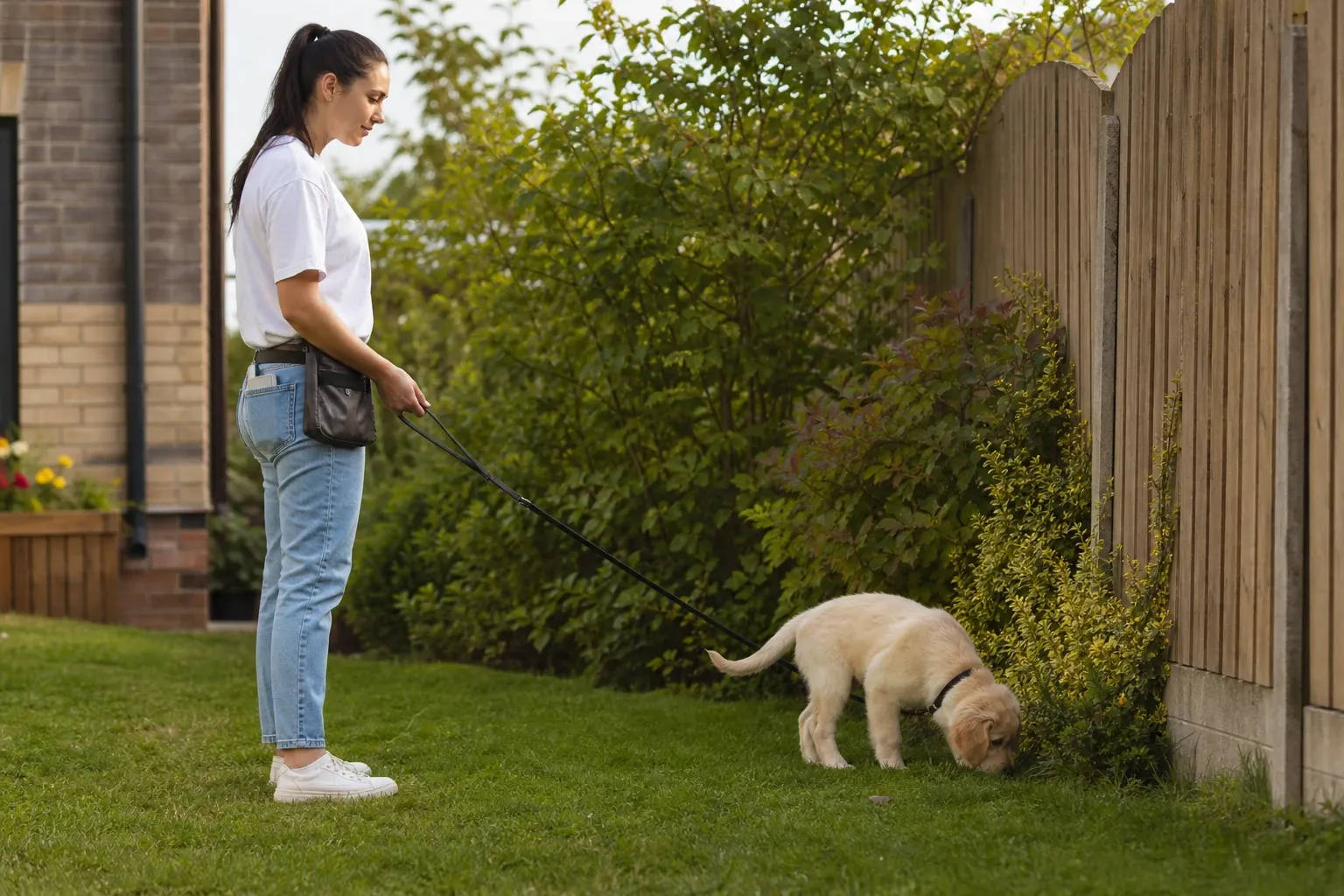
Puppy potty training starts the day your puppy comes home, usually around 8 weeks old, with one spot, one cue word and treats ready. Yes, an 8-week-old can pee outside from day one. You just choose where with care.
What to set up before day one
A simple setup makes puppy potty training far easier from the first trip. This list suits every new puppy owner:
- A designated potty spot: one patch of your own yard or a clean, private area. The familiar smell helps your puppy get the idea.
- A cue word: something short like “go potty”. Everyone in the house uses the same words.
- Treats by the door: tiny, soft pieces in a jar, so you’re never hunting for one.
- A leash and shoes you can grab fast.
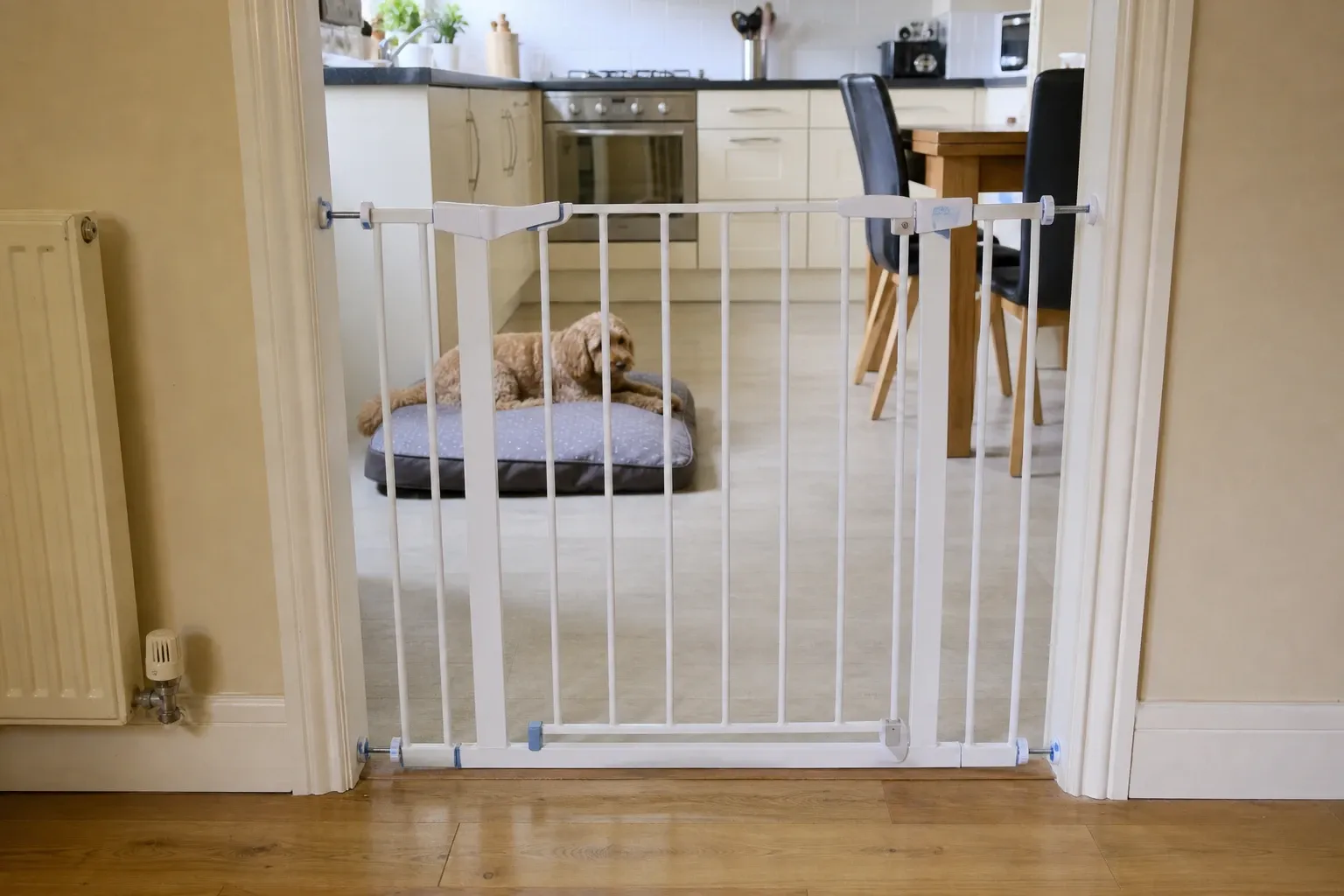
- A crate, pen or baby gate for times you can’t watch.
The core loop: out, wait, reward
The core loop is simple: take your puppy out, stand still, say the cue calmly, and reward within a few seconds of them finishing. Stay boring while they sniff. Once they go, give praise and a treat right there, not back in the kitchen. Praise and treats (positive reinforcement, meaning a good result that makes a behaviour more likely) work because your puppy links peeing outside with something nice.
For example, your puppy wakes from a nap. You carry them out, wait quietly for two minutes, they pee, and you say “yes!” and hand over a treat on the spot.
How often does a puppy need to go out?
A young puppy needs to go out very often, roughly every 1 to 2 hours while awake at first, plus after key moments. Bladder control grows slowly with age.
Bladder capacity by age
A common rule of thumb says a puppy can hold it about one hour per month of age, plus a little. It’s a loose guide, not a promise, and it’s best used as a ceiling, not a target.
| Age | Rough daytime gap to aim for |
|---|---|
| 8 to 10 weeks | About 1 hour, often less |
| 3 months | About 2 hours |
| 4 months | About 3 hours |
| 6 months | About 4 hours or a bit more |
For deeper detail on the early weeks, see our guide to potty training a puppy at 8 weeks old.
Times that always need a trip
Some moments call for a potty trip no matter the clock:
- Right after waking, including short naps
- Within 10 to 20 minutes of a meal
- After a big drink
- During and after play
- Before crate time and bedtime
Diet and water intake shape the schedule too. Feed set meals instead of leaving food out all day, so toilet times become easier to predict. Lifting the water bowl an hour or two before bed can help, but keep water available the rest of the day. For outings beyond your yard before vaccinations are done, ask your vet which places are safe.
What does a sample potty training day look like?
A sample potty training day is a repeating cycle of out, activity, out, rest, out. Here is one way it can look for a 10-week-old puppy.
A day for a 10-week-old puppy
This plan suits puppies around 9 to 12 weeks with someone home most of the day:
| Time | What happens |
|---|---|
| 6:30 | Wake, carry straight outside, reward |
| 6:45 | Breakfast |
| 7:00 | Out again |
| 7:05 to 7:45 | Play and short training, watched closely or on a leash tied to you (tethering) |
| 7:45 | Out, then nap in crate or pen |
| 9:30 | Wake, out, play |
| 10:30 | Out, nap |
| 12:30 | Out, lunch, out again |
| Afternoon | Same rhythm: out after each nap, meal and play |
| 17:30 | Dinner, then out |
| 21:00 | Water up, calm time |
| 22:30 | Last trip, then bed |
| 1:00 to 3:00 | One quiet night trip if needed |
Keep night trips dull: lights low, no play, straight back to bed. Pooping at night is common in young puppies, especially if dinner was late. Try feeding dinner a little earlier.
Our full schedule for potty training a puppy has more versions by age.
Adjusting for work or school
Busy households can still potty train well with a little help. Ask a friend, neighbour or dog walker to cover midday trips, and use a pen with a pad area if gaps run longer than your puppy can manage. Stretch the time between trips by 15 to 30 minutes only after a week or so of clean days.
Should you use a crate, pads or neither?
The best potty training method is the one that fits your home and schedule, whether that’s a crate, puppy pads or a pen with close supervision.
| Method | Best for | Pros | Cons | Common mistake |
|---|---|---|---|---|
| Crate | Owners home most of the day | Uses a puppy’s dislike of soiling their bed | Can’t be used for long stretches | Crate too big, or puppy left in too long |
| Puppy pads | Apartments, high floors, long absences | Gives a safe indoor option | Can teach that indoor toileting is fine | Moving pads around or never fading them out |
| Pen and supervision | People who prefer no crate | More room, flexible | Needs very close watching | Too much free run of the house too soon |
Crate method
Crate training works because most puppies avoid soiling where they sleep. The crate should be just big enough to stand, turn and lie down. Use a divider for growing puppies, and always take your puppy straight out when they leave it.
Puppy pad method
Puppy pads can suit apartment owners or anyone gone for long periods. Keep the pad in one fixed place. If your goal is outdoor toileting later, plan to move the pad slowly toward the door, then outside.
No-crate, pen and supervision method
A pen or gated area plus close supervision works for owners who’d rather skip a crate. When you can’t watch, your puppy goes in the pen. When you can, they’re in sight or tethered to you.
What should you do when your puppy has an accident?
When your puppy has an accident, stay calm, get them outside if you can, and clean the spot well. Accidents are normal in puppy potty training.
In the moment
If you catch your puppy mid-pee, say a cheerful “oops” and scoop them up. Carry them to their potty spot and reward if they finish there. If you find the mess later, just clean it.
Cleaning up
An enzymatic cleaner is the right tool, because it breaks down the smell that can draw your puppy back to the same spot. Regular sprays often leave traces your puppy can still smell. Blot first, soak the area with the cleaner, and let it dry fully.
Why punishment backfires
Punishment, such as scolding or rubbing a puppy’s nose in it, tends to teach a puppy to hide when they go, not to go outside. That’s how you end up with puddles behind the sofa. Treat each accident as a clue that the plan needs more trips or more supervision.
For adult dogs who still go indoors, the same steps apply: restart a puppy-style schedule, supervise closely and reward outdoor success. A sudden change in an adult dog’s habits is a reason to see a vet.
Do the 7 7 7 rule and the 3 day trick really work?
The 7 7 7 rule and the 3 day trick are loose ideas, not proven methods. Both can help in small ways, but neither finishes puppy potty training.
The 7 7 7 rule
The 7 7 7 rule is a popular saying with several versions. One version describes new experiences for puppies, such as meeting seven types of people and walking on seven surfaces. It isn’t a potty training rule, and there’s no research behind the numbers. Use it, if at all, as a reminder to keep early life varied and gentle.
The 3 day potty training trick
The 3 day trick means clearing a long weekend and watching your puppy almost nonstop, with very frequent trips outside. It can give habits a strong start, which is great for owners who can take time off. It won’t finish the job, though. Reliable bladder control often takes months, so carry the same routine on afterward.
Which puppies are hardest to potty train, and what is the hardest month?
No single breed is hardest to potty train, though small and toy breeds are often said to be slower. Their bladders are tiny, and their signals are easy to miss.
The individual puppy and the routine matter more than breed. A tiny puppy with a steady schedule often does better than a large one with a loose plan.
Many owners find the teenage stretch, around 5 to 8 months, the hardest. Puppies get more curious and distracted, and a puppy who seemed trained may start having accidents again. That’s a common setback, not failure.
For example, if your 6-month-old starts peeing inside after weeks of clean days, go back a step. Add trips, shorten free time in the house, and reward outdoor potty breaks generously again for a couple of weeks.
Checklist: is your plan working or does it need adjusting?
Your puppy potty training plan is working when accidents get rarer over the weeks. These signs show when to change something:
| Sign | What to try |
|---|---|
| Accidents at the same time each day | Add a trip 15 minutes before that time |
| Sniffing and circling indoors | Head out right away; watch more closely |
| Goes out, doesn’t pee, then pees inside | Stay out longer, then crate or tether for 10 minutes and try again |
| Night wake-ups to poop | Feed dinner earlier; keep night trips short and dull |
| Accidents on rugs | Roll rugs up for a while; use enzymatic cleaner |
| Sudden change, straining, or many small pees | Book a vet visit before changing training |
Quick tip: jot down each pee, poop and accident with the time for one week. Patterns jump out quickly on paper.
Once potty basics hold, some owners like a structured plan for what comes next. Brain Training for Dogs is a self-paced online course, and the maker says its 21 games across 7 modules cover obedience and behaviour training, with trick videos and a members’ forum. This assessment uses published course information; we have not worked through Brain Training for Dogs with a dog of our own.
See the current Brain Training for Dogs modules and refund terms on the creator’s site.
See what's inside Brain Training for Dogs60-day money-back guarantee
Where does potty training fit in your puppy’s training?
Potty training is one of the first building blocks of everyday puppy life, alongside crate time, basic cues and calm routines. The same tools carry over: short sessions, quick rewards and lots of patience and consistency.
If you’re planning what to teach next, our guide to dog & puppy training at home lays out a simple starting order. Keep your potty log going while you add new skills, and if anything changes suddenly, check in with your vet first.
More guides in Potty training
Owners also ask
How long does it take to potty train a puppy?
Most puppies take weeks to months to become reliable, and setbacks during adolescence are common. Progress depends on age, routine and how closely you supervise. Keep a steady schedule, reward every outdoor success and only stretch the time between trips after a run of clean days.
Can you potty train a puppy in 7 days?
A week of close supervision and frequent trips can build a strong start, and some puppies show clear progress. Full, reliable bladder control usually takes much longer, because young puppies can’t physically hold it for long. Keep the routine going well past the first week.
Is it too late to potty train an adult dog?
No. Adult dogs can learn good toilet habits with the same approach used for puppies: a regular schedule, one outdoor spot, rewards right after they go and close supervision indoors. If an adult dog’s habits change suddenly, see a vet to rule out a health cause first.