Heads up: some links here are affiliate links. If you buy through one we may earn a commission, at no extra cost to you. More
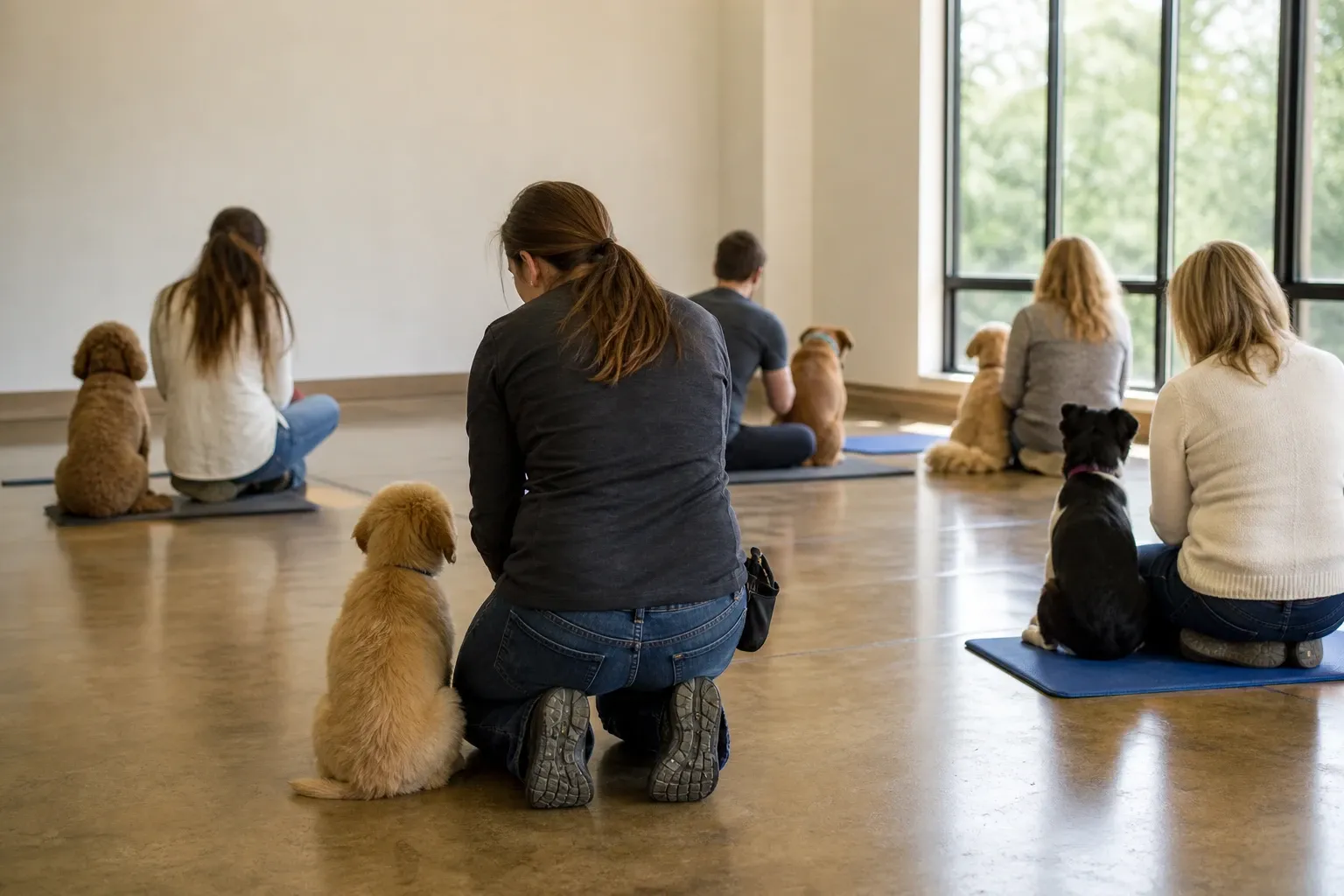
Quick verdict: online dog training or puppy classes?
Puppy classes win when you need live eyes on your dog, and online dog training wins when you need flexibility and practice at home. We compared them on four things: training method, format, support and whole price.
- Pick in-person puppy classes if you want live feedback and supervised socialisation (calm, positive meetings with new dogs, people and places).
- Pick a self-paced online course like Brain Training for Dogs if you want brain games and obedience basics on your own schedule.
- Pick both if you have a young puppy: a short class block for socialisation, plus an online course for daily home practice.
- Pick a certified dog trainer or behaviour professional if your dog is reactive, fearful or bites.
Whichever you choose, check three things first: the method is reward-based training (rewarding what you want rather than punishing what you don’t), you know the whole price, and you can see the refund or cancellation terms.
How do online courses and puppy classes compare side by side?
Online courses and puppy classes differ most on feedback, socialisation and schedule. Here’s how they stack up, row by row.
| Product / option | Training method | Format | Feedback | Socialisation | Schedule | Whole price | Best for | Main limit |
|---|---|---|---|---|---|---|---|---|
| Local group class | Varies by trainer; ask for reward-based | In person, small group | Live, from a trainer | Yes, supervised | Fixed weekly times | Per block, plus travel, treats and gear | Young puppies, first-time owners | Fixed times; group distractions can overwhelm shy dogs |
| Private trainer | Varies; ask for reward-based | One to one, at home or a venue | Live, tailored to your dog | Only if arranged | Booked sessions | Usually the highest per session | Specific problems, reactive dogs | Cost adds up |
| Brain Training for Dogs (self-paced online course, not a trainer) | Reward-based games, says the maker | Online videos, articles, forum and members’ area | Forum and questions to the trainer, not live watching | No | Any time, self-paced | Sale price $67 for the full course and bonus course (regular price shown as $127) | Adult dogs, busy owners, enrichment | Nobody watches your dog in real time |
Classes usually charge per block of sessions, so travel, missed weeks and kit add to the bill. Online courses are often a single fee; Brain Training for Dogs is sold as a single item through ClickBank’s checkout.
What do in-person puppy and dog classes do best?
In-person puppy classes do two things a video can’t: a trainer watches you handle your dog, and your puppy meets other dogs under supervision. That makes a group class a strong first step for new owners.
Live feedback on your timing and handling
A trainer gives live feedback on the small things you can’t see yourself. They can spot a tight leash, a treat that arrives two seconds late, or your dog’s body language saying “I’m worried.” For example, a trainer might notice you reward after your puppy stands up from a sit, and show you how to reward while they’re still sitting.
Supervised socialisation with other dogs and people
Good classes build socialisation carefully, with short, calm meetings rather than a free-for-all. The American Veterinary Society of Animal Behavior’s puppy socialisation position statement calls the first three months the most important time for socialisation and says puppy classes can offer a safe, organised way to do it. Before you book, check the vaccination requirements, the class size and that the trainer uses reward-based methods.
Quick tip: Ask if you can watch one class before joining. One visit shows you the method and the mood of the room.
Where classes fall short
Classes run at fixed times, need travel and can cost more as you add blocks. A busy room can overwhelm a shy dog. Practice still happens at home between sessions, so the class only works if you keep a home practice schedule.
What do online dog training courses do best?
Online dog training courses do best at flexible, repeatable practice in the place your dog actually lives. They suit busy households and adult dogs who need manners and something to think about.
Self-paced practice at home
A self-paced course lets you learn when it suits you and replay a lesson as often as you need. You train where problems happen, at the front door or in the kitchen. For example, if your dog jumps on guests, you can practise a sit at the actual door, not a church hall.
Short sessions and mental stimulation
Online courses fit short sessions of a few minutes, which keep training fun for you and your dog. Many focus on brain games: puzzles and tasks that give mental stimulation, which helps bored adult dogs and rainy-day puppies. Picture it like a crossword for your dog: small, regular, and satisfying.
Where online courses fall short
An online course can’t watch your dog or adjust to its body language in real time. There’s no live socialisation, and results depend on how regularly you practise. A course is not a treatment for aggression, biting or anxiety.
Is Brain Training for Dogs a good online option?
Brain Training for Dogs is a good pick if you want short, reward-based brain games and obedience exercises you can follow at home. It’s an online self-paced video course with articles, a forum and a members’ area, not a trainer who comes to you. This assessment uses published course information; we have not worked through Brain Training for Dogs with a dog of our own.
What is inside
The course is by Adrienne Farricelli, who says she is a CPDT-KA certified trainer (a certification from the Certification Council for Professional Dog Trainers) with 15 years of experience. The maker lists:
- 7 modules, from Preschool to Einstein, with over 21 games for obedience and behaviour training
- 7 trick training videos, such as Take a Bow, Play Dead and Roll Over
- Adrienne’s Archive, over 100 articles
- A bonus course, Behavior Training for Dogs, covering whining, digging, barking, chewing and jumping
- A private forum and the ability to submit questions to the trainer
The creator says the games build obedience and good behaviour step by step. A course description, though, doesn’t prove what any dog will learn.
Price and 60-day money-back guarantee
The sale price is $67 for the full course and bonus course, sold as a single ClickBank item, with a regular price shown as $127. The maker offers a 60-day money-back guarantee: you have 60 days from purchase, there’s nothing to return because it’s digital, and you ask by emailing the course creator (address on the sales page) or through ClickBank (clkbank.com) with your order number. Read those conditions before you buy, and buy from the creator’s own sales page.
Who should skip it
Skip Brain Training for Dogs if you want live feedback, have a reactive or aggressive dog, or want someone to watch your dog. A puppy who needs socialisation will also need real-world outings or a class alongside it.
Check the current Brain Training for Dogs course, price and refund terms on the creator’s site.
See what's inside Brain Training for Dogs60-day money-back guarantee
Which is right for your dog and situation?
The right choice depends on your dog’s age, behaviour and your week. Find your situation below.
Young puppy needing socialisation
A young puppy does best with a puppy class for socialisation plus an online course for home practice. Check the class’s vaccination requirements first. Example: one class a week, then two or three five-minute game sessions a day at home.
Adult dog needing manners and enrichment
An adult dog who needs obedience basics and mental stimulation is a strong fit for an online course. You can work on sit, stay and leave it in short sessions and add brain games on quiet evenings.
Busy schedule or no classes nearby
A busy owner, or anyone without a good class nearby, is usually better served by a self-paced course. Fit a few minutes of training around meals and walks, such as a sit before every food bowl goes down.
Reactive, fearful or biting dog
A reactive dog, or one who is fearful or bites, needs a certified behaviour professional, not a group class or a course. The CCPDT and IAABC list certified trainers and behaviour consultants. If behaviour changes suddenly, see your vet first, since pain or illness can be behind it.
If your dog fits the puppy-at-home, adult or busy-owner picture, see what’s in Brain Training for Dogs and how its refund works.
See what's inside Brain Training for Dogs60-day money-back guarantee
What will each option really cost?
The whole price of training is what you spend until you’ve finished, not just the sticker. For classes, add each block, travel, missed sessions, treats and any gear the class asks for. For a course, it’s the fee plus treats and toys you’d buy anyway.
Use this quick checklist before paying:
- Method: is it reward-based, with no shock, prong or fear-based tools?
- Format: will you really make the class times, or really open the course each week?
- Support: live feedback, a forum, or questions answered by email?
- Whole price: all blocks, travel and extras added up
- Terms: refund window or class cancellation policy, in writing
Cheaper per lesson isn’t better if you won’t finish it. For example, a lower-priced class block you miss half of can cost more per useful lesson than a course you practise from every day.
Comparing more online courses
If you’ve decided online training fits your week, the next step is choosing the right course. Our guide to the best online dog training courses compared sets courses side by side on method, format, support and whole price, so you can see which suits a puppy, an adult dog or a busy household. If you’re still at the very start, our page on dog and puppy training at home walks you through first steps like house training, crate time and simple cues before you pay for anything.
Owners also ask
How old should a puppy be to start puppy classes?
Many classes accept young puppies once they’ve had their first vaccinations, but each class sets its own rules. Ask the trainer about their vaccination requirements and check with your vet about your puppy’s schedule. You can start reward-based practice of sit and name response at home from the day your puppy arrives.
Can I combine online training with a local class?
Yes, and it often works well. A local class gives live feedback and supervised socialisation, while an online course gives you structured games and lessons to practise between sessions. Check that both use reward-based methods so your dog gets the same clear message, and keep home sessions short and regular.
How many weeks do puppy classes last?
Puppy class blocks vary by trainer, often running for several weekly sessions, and many offer follow-on levels. Ask how many sessions a block includes, what happens if you miss one, and whether a refund or make-up session is offered. Add up all blocks you expect to take to see the whole price.