Heads up: some links here are affiliate links. If you buy through one we may earn a commission, at no extra cost to you. More
Brain Training for Dogs: A $67 online course (regular price $127) with 21+ brain games across seven levels, obedience lessons, trick videos and a members' forum, with a 60-day refund window.
See what's inside Brain Training for Dogs60-day money-back guarantee
Start here
These five guides cover the skills most owners need first, so you can jump straight to the one you need today.
- Puppy potty training: a simple routine for outdoor trips, rewards and handling accidents calmly.
- Crate puppy training: how to make the crate a cosy, safe spot rather than a place your puppy dreads.
- How to stop my puppy biting: gentle ways to redirect sharp puppy teeth onto toys.
- Train loose leash walking: step-by-step leash manners so walks feel like a stroll, not a tug of war.
- Dog online training course: a side-by-side look at self-paced courses if you want structured lessons.
What is the first thing to train a dog?
The first thing to train a dog is to respond to its name and look at you, because every other cue starts with your dog paying attention.
After that, the order is simple: a potty and crate routine, then sit and come when called. You don’t need a paid program for this. Rewarding the moments your dog gets it right (positive reinforcement) works well at home when everyone in the house uses the same words and rules.
Keep sessions to two to five minutes, a few times a day. Think of it like brushing teeth: little and often beats one long session.
For a puppy under 16 weeks
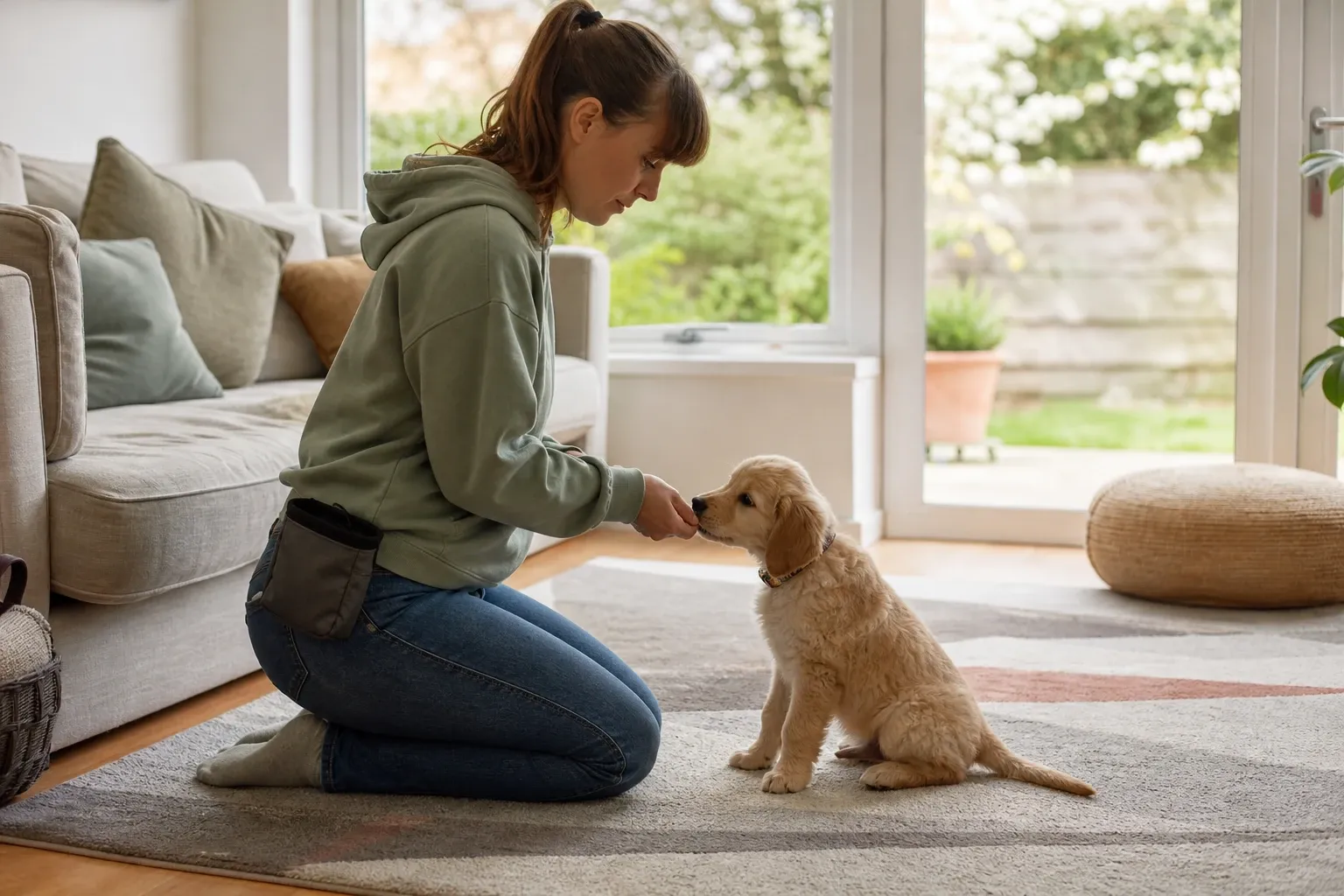
A puppy under 16 weeks should start with its name, a potty routine and the crate, and it can learn simple cues like sit alongside them. Say the name once, and when your puppy looks at you, give a treat. Repeat five times, then stop while it’s still fun.
Example: before each meal, say your puppy’s name, reward the glance, then ask for a sit before the bowl goes down.
For an adult or rescue dog
An adult or rescue dog does best starting with name response, house training and a calm routine before new cues. Many adult dogs arrive with habits from their old home, so treat house training as a fresh start.
Example: take a newly adopted dog out on a lead after every nap and meal, and reward the moment they go outside.
Which guide should you read first for your dog?
The best first guide for your dog depends on its age and the one problem causing the most trouble right now.
| Dog’s stage | Focus first | Then add |
|---|---|---|
| Puppy 8 to 16 weeks | Potty, crate, name, gentle handling | Biting and nipping, socialization |
| Adolescent, 4 months to 2 years | Come when called, leash manners | Stay, down, leave it, brain games |
| Adult or newly adopted | House training, routine, trust | Sit, recall, loose-leash walking |
Puppy 8 to 16 weeks
A puppy aged 8 to 16 weeks needs potty and crate habits, plus calm, happy meetings with new people, sounds and places (socialization). Nipping is normal at this age, so redirect it to a toy.
Example: carry a chew toy in your pocket and swap it in the second teeth touch skin.
Adolescent dog 4 months to 2 years
An adolescent dog often forgets cues it knew last month, which is normal and means it’s time to practise recall and leash walking again. Shorter, livelier sessions help. Brain games burn off extra energy too.
Example: hide a few treats around one room and let your dog sniff them out before a walk.
Adult or newly adopted dog
An adult or newly adopted dog learns best once it feels settled, so start with routine and simple wins. Sit and come are good early cues.
Everyday problems have quick signposts. For jumping on people, reward four paws on the floor. For barking, notice what sets it off and reward quiet. For chewing, offer legal chews and put shoes away.
What are the 3-3-3 and 7-7-7 rules?
The 3-3-3 and 7-7-7 rules are popular rules of thumb, not official standards, that help owners plan the first weeks with a new dog or puppy.
Neither rule is a timetable. Every dog adjusts at its own pace, so use them as loose guides.
The 3-3-3 rule for a newly adopted dog
The 3-3-3 rule says a newly adopted dog may feel unsure for about 3 days, start settling over 3 weeks, and feel at home around 3 months.
In the first 3 days, keep life quiet and skip big outings, though short, gentle games like name practice are fine from day one. By 3 weeks, most dogs are ready for more regular sessions. Around 3 months, you’ll often see more of your dog’s real personality.
Example: in week one, practise only name response and potty trips. Save the busy park for later.
The 7-7-7 rule for puppies
The 7-7-7 rule is a loose socialization checklist some breeders and trainers use: before about 16 weeks, a puppy meets around 7 new surfaces, 7 kinds of people, 7 sounds and similar sets of new things.
Different versions list different categories, so treat it as a reminder to offer variety, not a fixed plan. What matters is that each new experience is short, calm and paired with treats. Let your puppy watch from a distance if it seems unsure.
Example: let your puppy walk on grass, tile and a doormat in one afternoon, with a treat on each.
How do you train a puppy to come to you?
You train a puppy to come by making the word “come” mean something wonderful, starting indoors at short distances with tasty treats and a happy voice.
This cue is worth more effort than any other, because it can keep your dog safe. Our full guide to teaching come goes deeper.
Step-by-step recall at home
Recall at home starts with one step of distance and grows slowly as your puppy succeeds.
- Kneel a few feet away and say your puppy’s name and “come” in a cheerful voice.
- When your puppy reaches you, give a soft treat and praise.
- Repeat three to five times, then stop.
- Over the next sessions, add a room’s distance, then the garden.
- Add small distractions only once it works every time.
Example: two family members sit at opposite ends of a hallway and take turns calling.
Common recall mistakes
The biggest recall mistake is calling your dog for something it dislikes, such as a bath or the end of playtime. Go and get your dog for those instead.
Other slip-ups: repeating “come” again and again, and moving outdoors too soon. The same patient method works for sit, stay, down and leave it next.
Quick tip: call your dog, reward, then let them go back to play. Coming back stops meaning the fun is over.
How can you calm a dog while training?
You can calm a dog during training with slow, gentle strokes on the chest, shoulders or along the side, plus short breaks.
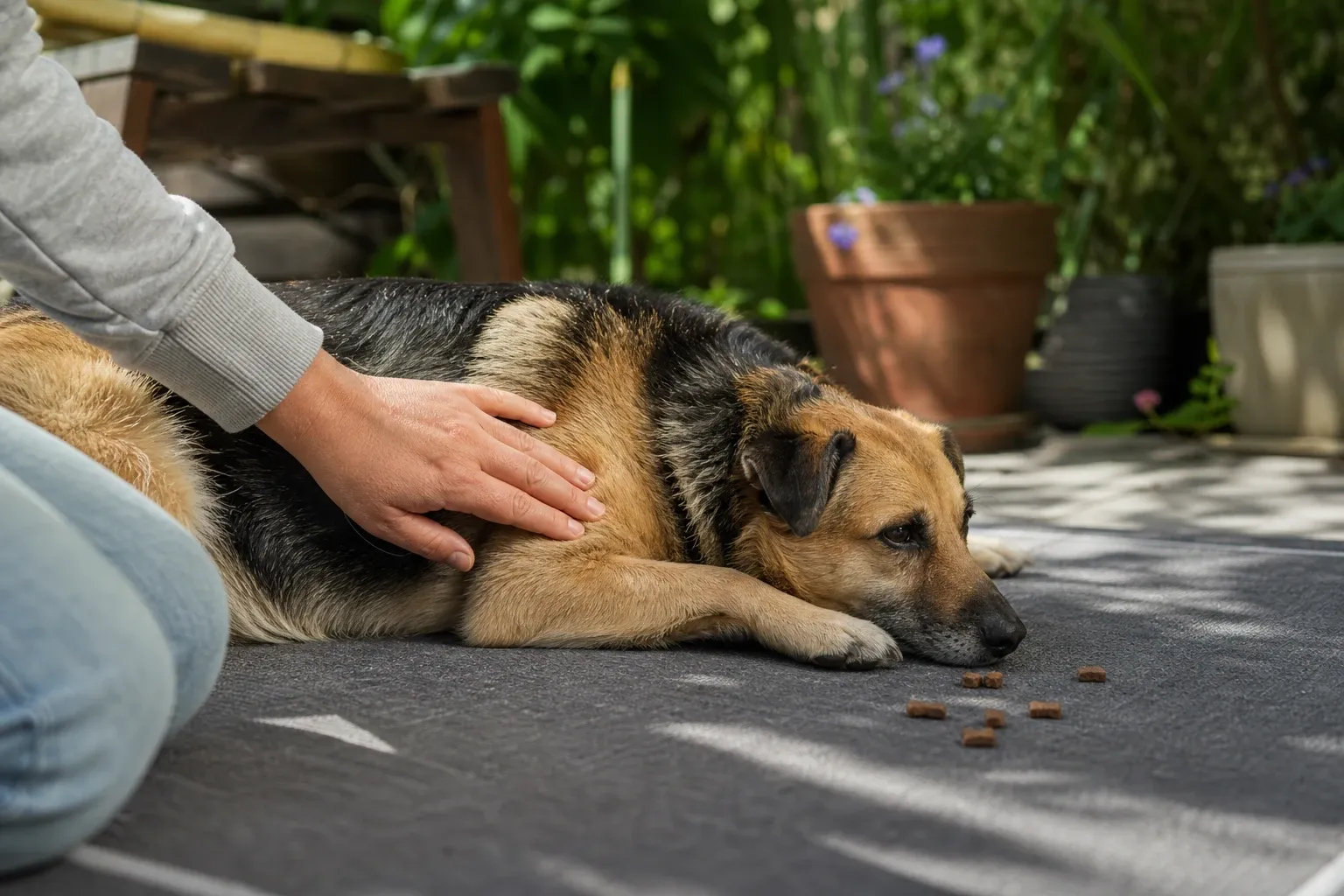
Watch how your dog responds. Leaning in usually means they like it. Moving away, licking lips or turning the head means stop and give space. Many dogs dislike hands reaching over the top of the head.
Pair touch with a settle on a mat: reward your dog for lying down on it, then stroke slowly. A quiet sniffing game or a food puzzle also helps a dog wind down between cues.
Example: after three minutes of recall practice, scatter a few treats on a mat and let your dog sniff and lie down there.
This is everyday calming, not treatment. If your dog seems scared often, or the fear is intense, talk to your vet.
Do you need a class, a trainer or an online course?
Most owners don’t need to pay for anything to start, but a class, trainer or course can add structure and support.
Home training, group classes and board and train
Each option suits a different budget, schedule and kind of support, and every one still needs you to practise at home.
| Option | Cost style | Your time | Support | Best for |
|---|---|---|---|---|
| Free home training | Free | Daily short sessions | Guides only | Confident, patient owners |
| Group class | Per course, set locally | Weekly class plus practice | Live trainer, other dogs | Puppies needing socialization |
| Private trainer | Per session | Sessions plus practice | One-to-one advice | Specific or tricky habits |
| Day training | Per day or package | Less, plus handover lessons | Trainer works your dog by day | Busy households |
| Board and train | Program fee | Handover lessons, then practice | Dog stays with trainer | Owners who’ll keep practising after |
| Self-paced online course | Paid once or per course | Your own pace | Videos, articles, maybe a forum | Owners who want structured lessons |
Board and train means your dog lives with a trainer for a set time. Day training means a trainer works with your dog during the day while you’re out. With both, your dog still needs you to keep using the skills at home, or they can fade.
Where an online course fits
An online course fits owners who want step-by-step lessons on their own schedule and are happy to do the training themselves.
Brain Training for Dogs, by certified trainer Adrienne Farricelli, is the course we feature most: short, reward-based brain games and obedience lessons you follow at home. Our Brain Training for Dogs review covers what’s inside, and the online course comparison sets it beside other options. A course can’t watch your dog, so it isn’t a fit for serious fear or aggression.
If game-based lessons sound like your style, check the current Brain Training for Dogs modules, price and refund terms on the creator’s site.
See what's inside Brain Training for Dogs60-day money-back guarantee
How do you find a good dog trainer?
A good dog trainer uses reward-based methods, explains clearly what they’ll do, and welcomes your questions.
Questions to ask
The right questions show a trainer’s methods and support before you pay.
- What methods and tools do you use, and what happens when a dog gets it wrong?
- Do you hold any certifications, and are you insured?
- How many dogs are in a class?
- Can I watch a class or book a trial visit first?
- What follow-up support do you offer?
Example: ask, “What would you do if my dog pulled on the lead?” A good answer talks about rewarding a loose lead.
Red flags
The clearest red flags are big promises about outcomes and tools meant to hurt or scare.
- Claims that any problem can definitely be fixed
- Shock, prong or choke collars, or any pain-based method
- Talk of “dominating” your dog
- Annoyance when you ask questions or want to watch
What qualifications do trainers have?
Dog trainers don’t need a legal licence in many places, so qualifications vary a lot. Some are certified trainers through independent exams. Others learned by apprenticeship with an experienced trainer.
If you want to train dogs yourself one day, a common path is study, hands-on practice with an experienced trainer, then an independent certification. Ask any trainer which body certified them and check it.
When should you see a professional trainer?
You should see a professional when your dog growls, bites, shows intense fear, panics when left alone (separation anxiety), or lunges and barks at other dogs or people (reactivity).
Start with your vet. Pain or illness can change how a dog behaves, and any sudden change needs a vet visit first. Then look for a certified behaviour professional who uses reward-based behavior modification, meaning a structured plan to change how your dog feels and reacts. The CCPDT and IAABC keep directories of trainers and behaviour consultants who have passed their exams, and veterinary behaviourists are vets with extra specialist training in behaviour. Check the credentials and ask how they train.
Home guides and online courses are great for everyday manners. They aren’t a replacement for in-person help with these problems.
Example: if your gentle dog suddenly snaps when you touch its back, book a vet check before any training.
Every guide on this site
Training basics
Crate training
- Crate training basics
- Crate training at night
- Crate time during the day
- Crate training by age
- Crates by breed and size
Potty training
- Potty training basics
- Potty training schedule
- Potty training by age
- Pee pad training
- Bell training
- Potty training by size and breed
Cues and manners
Games and tricks
Online courses
Owners also ask
How long should a puppy training session be?
A puppy training session works best at two to five minutes. Young puppies lose focus fast, so several tiny sessions spread across the day teach more than one long one. Stop while your puppy is still keen, and end on an easy win so the next session starts happily.
Can you train an older dog at home?
Yes, older dogs can learn new cues and habits at home with treats, praise and short sessions. Go at your dog’s pace, keep floor work gentle for stiff joints, and choose soft, tasty rewards. If your older dog seems sore or slow to move, ask your vet before starting.
How long does it take to train a puppy?
There’s no set timeline for training a puppy. Every puppy learns at its own pace, and skills like potty training and recall keep improving with practice over months. Consistent daily routines, patience and rewards matter more than the calendar, and some refreshers are normal during adolescence.
Is it too late to start training an adult dog?
It’s never too late to start training an adult dog. Adult dogs often focus better than puppies. Old habits may take patience to change, so reward the behaviour you want and keep sessions short. For growling, biting or strong fear, see your vet and a qualified professional.
What treats work best for dog training?
Small, soft treats your dog loves work best, because they’re eaten quickly and keep the session moving. Pea-sized pieces are plenty. Save the tastiest rewards for hard cues like recall, and take treats out of your dog’s daily food allowance so meals stay balanced.
Should everyone in the family use the same cue words?
Yes, everyone in the household should use the same cue words and rules. If one person says “down” for lying down and another uses it for getting off the sofa, your dog gets confused. Write the cue list on the fridge so the whole family stays consistent.